
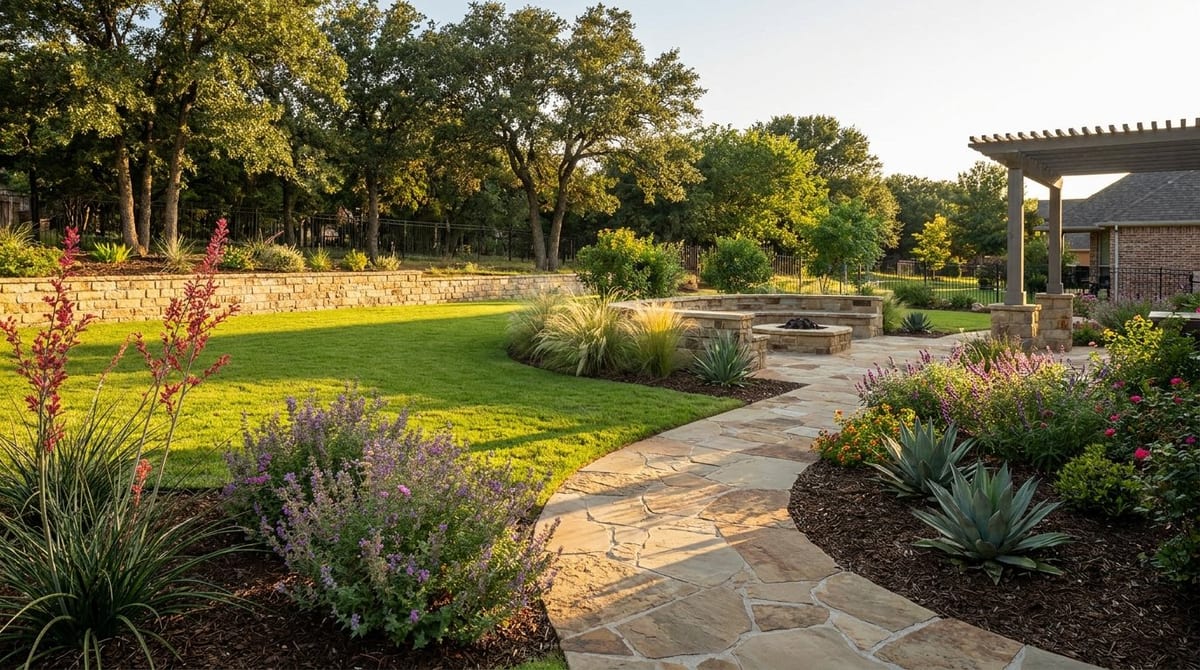
How to save water in your landscape
Drip, smart controllers, mulch, and scheduling — cut water without losing green.
By The T.A.P. Team · June 2024 · 5 min read
Cutting your landscape water use in North Texas doesn't mean a brown yard — it means delivering water more efficiently and reducing waste. The biggest savings come from drip irrigation for beds, a weather-smart controller, heavy mulch, matching plants to their spot, and correct scheduling. Together these can slash the largest line on a summer water bill while keeping the yard green. Here's how.
- Drip irrigation for beds (water to roots)
- A smart / weather-based controller
- Mulch beds 2–3 inches deep
- Right plant, right place (hydrozoning)
- Water deeply, early morning, less often
Fix the irrigation first
The biggest waste is usually the irrigation itself: spray heads on beds lose water to evaporation and overspray, and broken or misaligned heads dump water on pavement. Switch beds to drip (water goes straight to the roots), fix and align heads, and add a smart controller that adjusts to the weather and skips watering after rain. This alone can cut a lot.
Mulch and soil
A 2–3 inch layer of mulch over beds dramatically reduces evaporation and suppresses weeds, so the water you apply lasts far longer. Improving our tight clay soil so it absorbs and holds water — rather than shedding it — stretches every gallon further. Bare, unmulched soil is a water thief.
Right plant, right place
Thirsty plants in the wrong spot force you to overwater everything around them. Choosing native and adapted plants that thrive on our rainfall, grouping plants by water need (hydrozoning), and reducing thirsty turf are the design moves behind drought-tolerant landscaping.
Schedule smart
Finally, water deeply, early in the morning, and less frequently — the same habits that build a drought-resilient lawn — and obey city watering restrictions. A rain/soil sensor prevents watering when nature already did. Efficient scheduling turns all the other savings into a lower bill.
| Waste | Fix |
|---|---|
| Spray heads on beds | Switch to drip |
| Broken/misaligned heads | Repair & align |
| Watering on a timer, rain or shine | Smart / weather-based controller |
| Bare soil beds | Mulch 2–3 inches |
| Thirsty plants everywhere | Native plants + hydrozoning |
Saving landscape water comes down to two levers: delivering water efficiently (drip, a smart controller, mulch, morning deep-watering) and reducing demand (native plants, less thirsty turf, grouping by water need). Do both and you cut the summer water bill substantially without letting the yard go brown. Fixing a few broken sprinkler heads and adding a rain sensor is often the fastest first win.
Water savings in North Texas
With hot summers and frequent watering restrictions, efficient landscapes save real money across Allen, Plano, and Flower Mound. We install drip, smart controllers, and water-wise designs. See our landscaping team.
The short version
- Saving landscape water means efficient delivery and less waste — not a brown yard.
- Switch beds to drip irrigation so water reaches roots, not the air.
- A smart, weather-based controller skips watering when it rains.
- Mulch beds 2–3 inches deep to cut evaporation and weeds.
- Choose native plants and group by water need (hydrozoning).
- Water deeply, early morning, and less often — and fix broken sprinkler heads.
Saving landscape water — frequently asked questions

Want a lower water bill?
Get an efficient irrigation and landscape upgrade. Serving Dallas–Fort Worth & North Texas for over 25 years.