
Drought-tolerant landscaping ideas for North Texas
Xeriscape done right — native plants, mulch, and smart design that still looks great.
By The T.A.P. Team · June 2024 · 6 min read
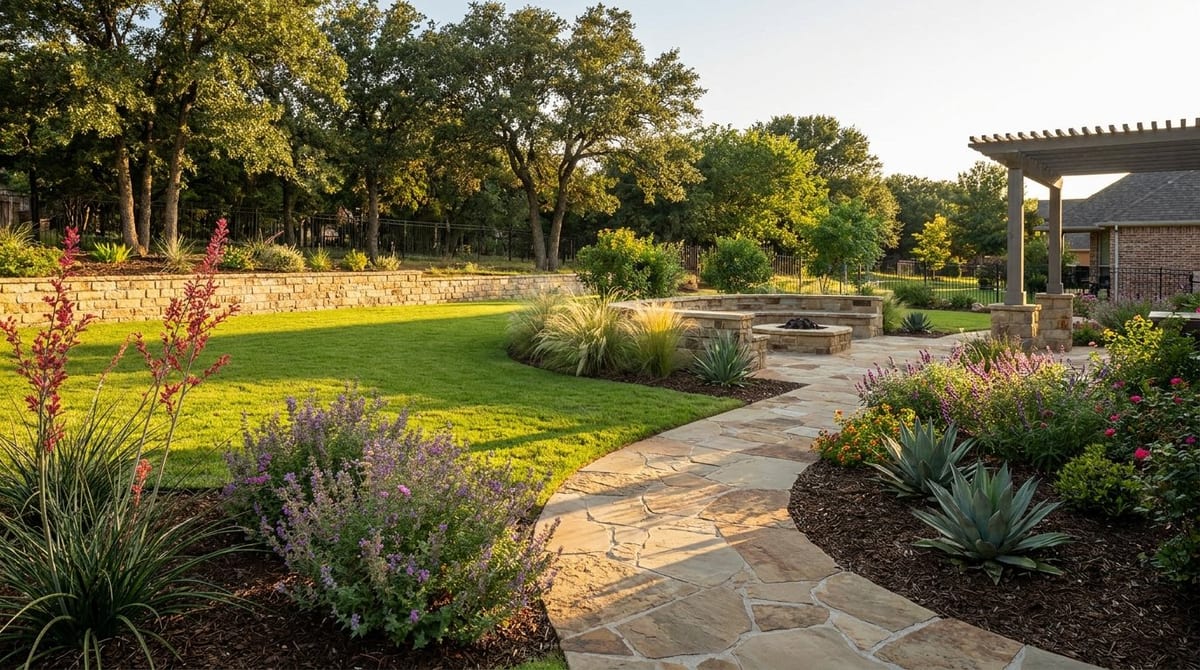
Drought-tolerant landscaping (often called xeriscaping) isn't gravel and cactus — done right, it's a lush, colorful yard that simply uses far less water. In water-restricted, hot North Texas, it means choosing native and adapted plants, reducing thirsty turf, mulching heavily, grouping plants by water need, and watering efficiently. Here are the ideas that cut water bills and survive our summers while still looking beautiful.
- Use native and adapted, drought-tough plants
- Reduce high-water turf; keep lawn where you use it
- Mulch beds heavily to hold moisture
- Group plants by water need (hydrozoning)
- Water efficiently (drip, early morning)
Right plants: native and adapted
The foundation of a low-water yard is plants that are built for our climate. Texas natives and adapted species thrive on far less water once established — think salvias, lantana, yucca, ornamental grasses, and Texas sage. They handle heat and drought that would fry thirsty exotics. See native and Texas-tough plants.
Rethink the turf
Lawn is the thirstiest thing in most yards, so the biggest water savings come from keeping turf only where you actually use it — play areas, a green patch — and replacing the rest with planting beds, groundcover, or hardscape. If you keep lawn, drought-tough Bermuda or Zoysia uses less than St. Augustine.
Mulch and smart grouping
A 2–3 inch layer of mulch over beds dramatically cuts evaporation and smothers weeds, so the water you do apply lasts longer. Improving our tight clay soil helps roots reach moisture. And "hydrozoning" — grouping thirsty plants together and drought-tough ones together — means you never overwater the tough plants to keep the thirsty ones alive.
Water efficiently
Efficient delivery finishes the job: drip irrigation for beds (water goes to roots, not the air), early-morning watering, and a smart controller that skips the sprinklers when it rains. Together these can cut landscape water use substantially — see saving water in your landscape and our landscaping services.
| Thirsty | Drought-tough swap |
|---|---|
| Large St. Augustine lawn | Reduced Bermuda/Zoysia + beds |
| Thirsty annual color | Native perennials & grasses |
| Bare soil beds | Mulched beds |
| Spray irrigation on beds | Drip irrigation |
| Mixed water needs together | Hydrozoned groupings |
A beautiful low-water yard isn't about ripping everything out for rock — it's three habits: choose native and adapted plants that thrive on our rainfall, blanket beds in mulch to hold what water you apply, and group plants by water need so you're not overwatering the tough ones to save the thirsty ones. Add drip irrigation and you've cut the water bill without cutting the beauty.
Water-wise yards in North Texas
With DFW summers hot and watering restrictions common, drought-tolerant design is both practical and popular across Allen, Frisco, and Flower Mound. We design and install water-wise landscapes that still look lush. See our landscaping team.
The short version
- Drought-tolerant landscaping isn't rock and cactus — it's a lush yard that uses less water.
- Native and adapted plants thrive on our rainfall once established.
- Lawn is the thirstiest element — keep turf only where you use it.
- Mulch beds 2–3 inches deep to cut evaporation and weeds.
- Group plants by water need (hydrozoning) so you don't overwater.
- Drip irrigation and a smart controller finish the water savings.
Drought-tolerant landscaping — frequently asked questions
Want a water-wise yard?
Get a drought-tolerant landscape designed for your home. Serving Dallas–Fort Worth & North Texas for over 25 years.