
Native & Texas-tough plants for a low-maintenance yard
The plants that thrive on our rainfall, shrug off heat, and need little fuss.
By The T.A.P. Team · September 2024 · 5 min read
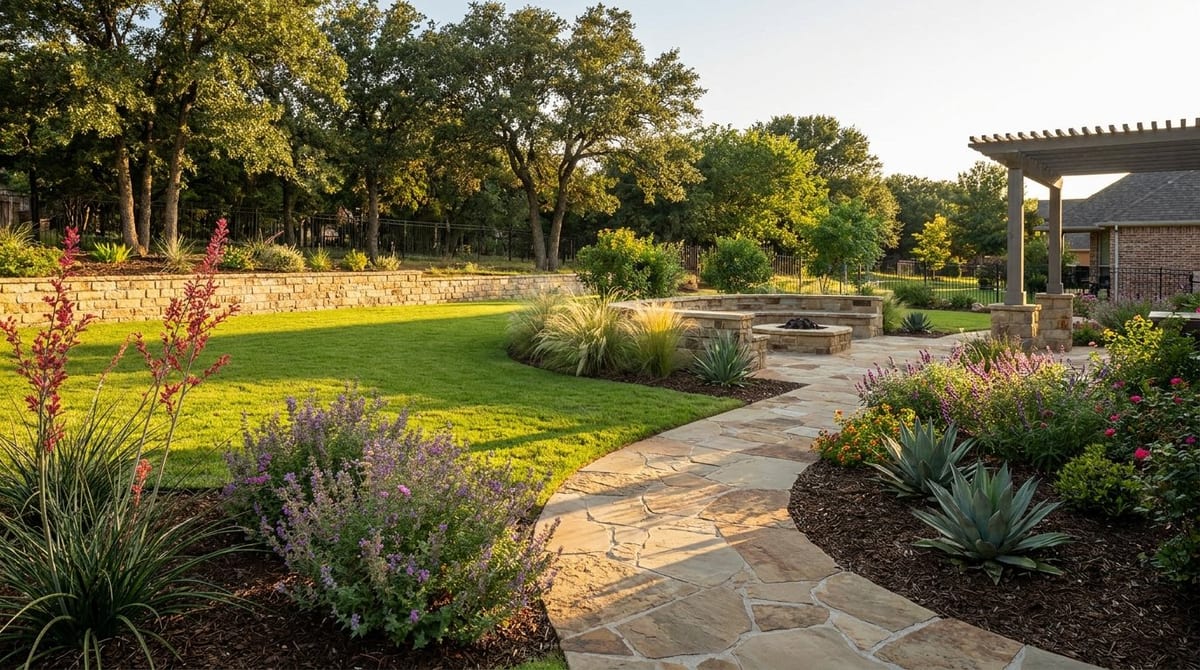
The secret to a beautiful, low-maintenance North Texas yard is choosing native and adapted plants — the ones built for our heat, drought, and clay soil, so they thrive on little water and minimal fuss once established. They also support local pollinators and give you color without the constant care thirsty exotics demand. Here are the Texas-tough plants that reliably perform in DFW.
- Salvia & lantana — long color, love heat
- Texas sage (cenizo) — silver, drought-proof
- Yucca & agave — sculptural, water-thrifty
- Ornamental grasses — movement, low care
- Once established, they need little water
Flowering perennials
For long-season color that laughs at the heat, hard-to-beat perennials include autumn sage and other salvias, lantana, coneflower, black-eyed Susan, and blackfoot daisy. They bloom for months, need little water once established, and draw pollinators — the backbone of a colorful, low-water bed.
Shrubs and structure
For structure, Texas sage (cenizo) is a silver-leaved, utterly drought-proof shrub that bursts into bloom after rain; rosemary and dwarf yaupon holly are tough, tidy evergreens; and Turk's cap brings red blooms to shady spots. These give a garden its bones without demanding water.
Architectural plants and grasses
Sculptural, water-thrifty accents like yucca, agave, and red yucca add year-round form, while ornamental grasses — Gulf muhly, little bluestem, and Mexican feather grass — add movement and texture with almost no care. Grasses especially shine in drought-tolerant designs.
Design for success
Even tough plants do best with a little planning: group them by water need, mulch the beds, and plant in fall so they establish before summer. "Right plant, right place" — matching each plant to its sun and moisture — is what turns a collection of tough plants into a genuinely low-maintenance yard. Pair them under adapted trees.
| Type | Texas-tough picks |
|---|---|
| Perennials | Salvia, lantana, coneflower, blackfoot daisy |
| Shrubs | Texas sage, rosemary, dwarf yaupon |
| Shade | Turk's cap, cast iron plant |
| Architectural | Yucca, agave, red yucca |
| Grasses | Muhly, little bluestem, feather grass |
The lowest-maintenance yards aren't the ones with the most fussing — they're the ones planted with natives and adapted species that already fit our climate. Choose plants built for our heat, drought, and clay; group them by water need; mulch; and plant in fall. They reward you with color and structure while asking for a fraction of the water and care that thirsty exotics demand.
Texas-tough planting in DFW
Native and adapted plants are the foundation of low-water, low-fuss yards across Allen, Frisco, and McKinney. We design and plant beds that thrive on our climate. See our landscaping team.
The short version
- Native and adapted plants thrive on our rainfall and shrug off the heat once established.
- Salvia, lantana, coneflower, and blackfoot daisy give long, low-water color.
- Texas sage (cenizo) is a silver, utterly drought-proof structural shrub.
- Yucca, agave, and ornamental grasses add sculptural form with almost no care.
- Group plants by water need, mulch, and plant in fall for the best results.
- Right plant, right place is what makes a yard genuinely low-maintenance.
Native & Texas-tough plants — frequently asked questions
Want a low-maintenance yard?
Get a native, water-wise landscape designed for you. Serving Dallas–Fort Worth & North Texas for over 25 years.