
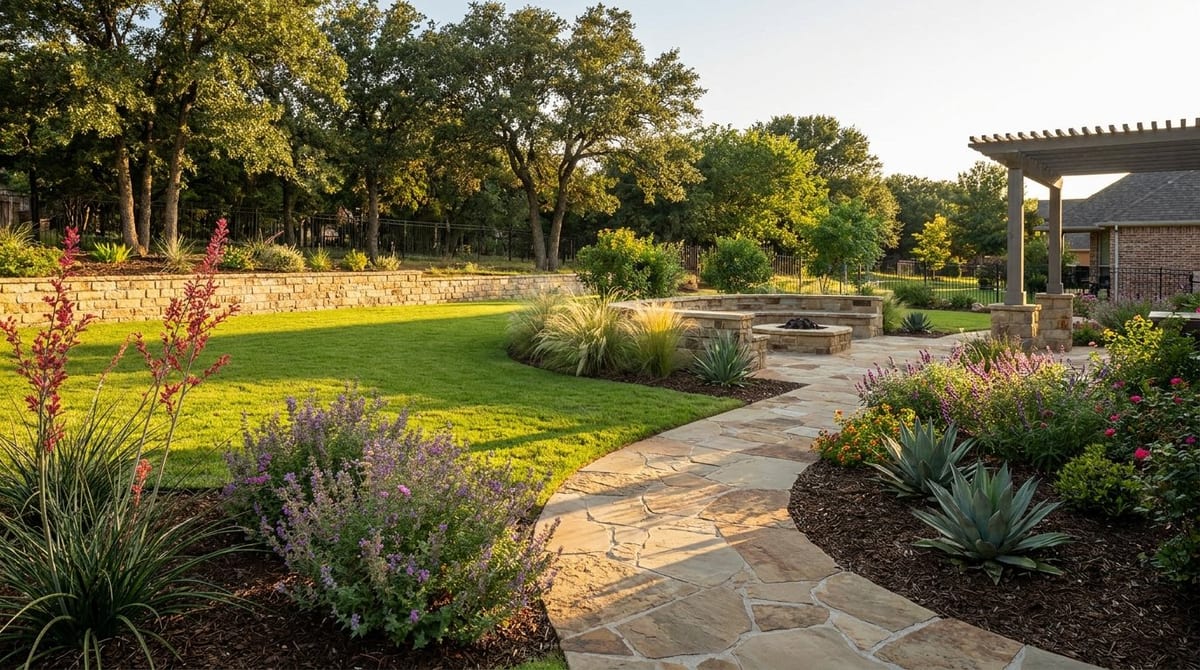
The best trees to plant in North Texas
Tough, adapted shade trees that handle our heat, drought, and clay — and what to avoid.
By The T.A.P. Team · October 2024 · 6 min read
The best trees for a North Texas yard are the ones adapted to our tough conditions — heat, drought, and expansive clay soil — which means favoring native and proven shade trees over fast-growing but weak or short-lived species. Reliable choices include live oak, cedar elm, Texas red oak, bur oak, and Chinquapin oak, among others. Here's what thrives here, what to avoid, and how to plant for the long haul.
- Live oak — evergreen, durable, broad shade
- Cedar elm — very tough, tolerates clay
- Texas red oak / Shumard — great fall color
- Bur oak & Chinquapin oak — big, adapted
- Avoid weak, short-lived, or invasive species
Great shade trees for DFW
The workhorses of North Texas shade are the adapted oaks and elms: live oak (a durable, semi-evergreen, long-lived broad shade tree), cedar elm (extremely tough and clay-tolerant), Texas red oak and Shumard oak (reliable with excellent fall color), plus bur oak and Chinquapin oak for big, adapted shade. These handle our heat, drought, and soil far better than trendier picks.
Ornamental and smaller trees
For smaller spaces or accents, crape myrtle brings months of summer color and takes the heat, while Texas redbud, Mexican plum, and desert willow are tough, attractive natives. These fit under power lines and near patios where a big shade tree won't, and they support pollinators.
What to avoid
Be wary of fast-growing, weak-wooded trees — several popular fast species split apart in our storms or are short-lived, so "cheap and fast" often means "gone in 15 years and a mess to remove." Also avoid known problem and invasive species. A slightly slower, adapted tree is a far better long-term investment.
Planting for the long haul
Plant trees in fall so roots establish before summer, set them at the right depth (not too deep), mulch the root zone, and water attentively for the first couple of years. Crucially, place the tree for its mature size — away from the foundation, walls, and utility lines. Pair it with Texas-tough plants below.
| Tree | Note |
|---|---|
| Live oak | Evergreen, durable, broad shade |
| Cedar elm | Very tough, clay-tolerant |
| Shumard / Texas red oak | Great fall color |
| Bur / Chinquapin oak | Big, well-adapted |
| Crape myrtle, redbud | Smaller / ornamental |
| Fast weak-wood trees | Avoid — short-lived |
The two decisions that determine whether a tree becomes a decades-long asset are species and placement. Choose an adapted, native shade tree that's built for our heat and clay rather than a fast-growing, weak-wooded one that fails early. Then place it for its full mature size — away from the house, walls, and lines — and plant it in fall. A well-chosen, well-placed tree pays back for generations.
Trees for the DFW climate
North Texas heat, drought, and expansive clay are hard on the wrong trees and easy on the right ones, so adapted natives dominate the best-tree lists across Southlake, Plano, and Frisco. We help select and plant trees that thrive. See our landscaping team.
The short version
- The best North Texas trees are tough, adapted natives built for heat, drought, and clay.
- Reliable shade trees: live oak, cedar elm, Shumard/Texas red oak, bur and Chinquapin oak.
- Crape myrtle, Texas redbud, and Mexican plum are good smaller/ornamental picks.
- Avoid fast-growing, weak-wooded trees that split in storms or die young.
- Plant in fall, at the right depth, and water to establish for the first couple of years.
- Place trees for their mature size — away from the foundation, walls, and lines.
Best trees for North Texas — frequently asked questions
Adding trees to your yard?
Get the right trees selected and planted. Serving Dallas–Fort Worth & North Texas for over 25 years.