
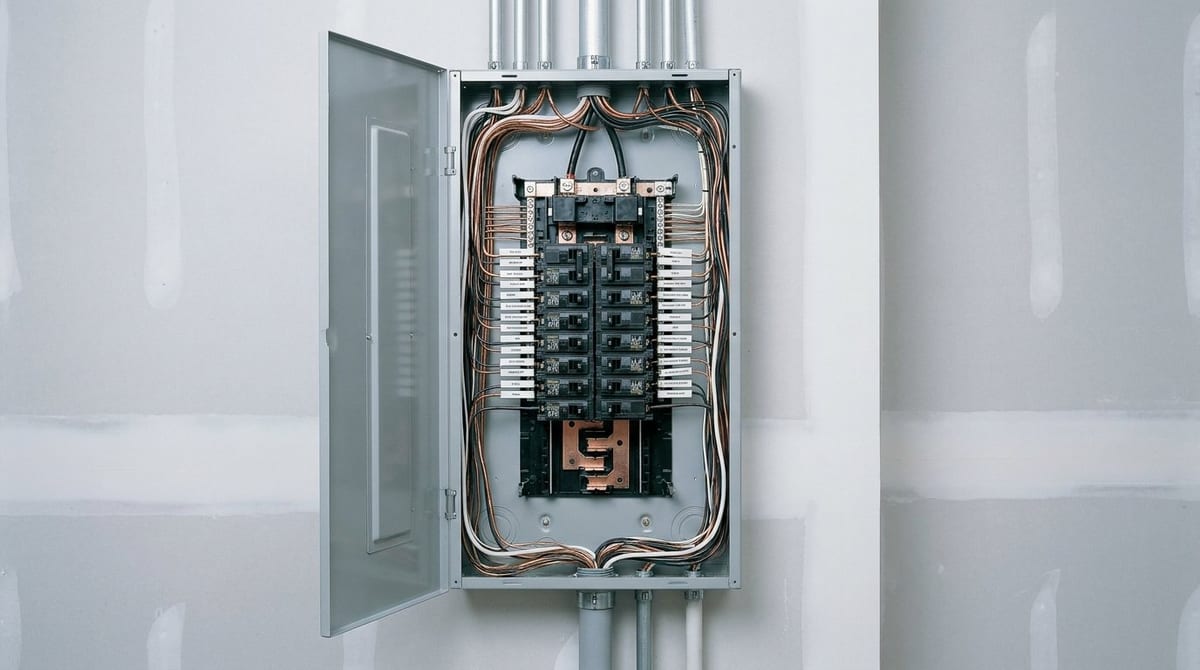
What is a dedicated circuit?
One circuit, one appliance — what needs one and why it stops the tripping.
By The T.A.P. Team · July 2024 · 5 min read
A dedicated circuit is an electrical circuit that serves just one appliance or piece of equipment, with its own breaker — so that appliance never has to share power with anything else. High-draw or sensitive appliances need their own circuit to run reliably and safely: refrigerator, microwave, window AC, EV charger, hot tub, and more. It's often the real fix for a breaker that keeps tripping. Here's what needs one and why.
- One circuit serves one appliance
- High-draw items need their own circuit
- Prevents overloads and nuisance tripping
- Code requires it for many major appliances
- Common fix for a breaker that keeps tripping
What it is
A dedicated circuit is a single run of wire and its own breaker feeding just one outlet or appliance — nothing else shares it. That means the appliance always has the full circuit's capacity available and can't be knocked offline (or trip the breaker) because something else on the same circuit turned on.
What needs a dedicated circuit
High-draw and critical appliances need their own circuit, and code requires it for many: the refrigerator, microwave, dishwasher, garbage disposal, electric range and oven, dryer, and window or portable AC, plus an EV charger, hot tub, sump pump, freezer, and workshop equipment. If it draws a lot or you can't afford to have it trip, it wants a dedicated circuit.
Why it matters
Put a high-draw appliance on a shared circuit and it overloads — the classic cause of a breaker that keeps tripping. A dedicated circuit gives the appliance reliable, uncontested power, protects it from voltage dips when other things start, and keeps sensitive electronics stable. It's the correct fix when a circuit is chronically overloaded.
Adding one
An electrician runs a new circuit from your panel to the appliance, which requires a spare breaker slot — and if the panel is full, a panel upgrade first. Dedicated circuits are commonly added during kitchen remodels, EV-charger installs, and additions. See our electrical services.
| Appliance | Dedicated circuit? |
|---|---|
| Refrigerator / freezer | Yes |
| Microwave, dishwasher, disposal | Yes |
| Electric range / dryer | Yes (240V) |
| Window / portable AC | Recommended |
| EV charger, hot tub | Yes (240V) |
| Lamps, phone chargers | No — shared is fine |
The fix for a circuit that keeps tripping usually isn't a bigger breaker — it's a dedicated circuit for the appliance that's overloading it. Overfusing (installing a larger breaker than the wire is rated for) is dangerous. Best practice is to put high-draw appliances on their own properly-sized circuits, which stops the tripping, protects the equipment, and keeps everything within safe limits.
Adding circuits in older DFW homes
Older North Texas homes were wired with fewer circuits than modern life needs, so adding dedicated circuits — for a new appliance, an EV charger, or a remodel — is a common request across McKinney, Plano, and Frisco. We add circuits and upgrade panels when needed. See our electrical team.
The short version
- A dedicated circuit serves just one appliance, with its own breaker.
- High-draw appliances need one: fridge, microwave, range, dryer, EV charger, hot tub.
- Code requires dedicated circuits for many major appliances.
- Sharing a circuit with a high-draw appliance is a classic cause of tripping.
- A dedicated circuit gives reliable, uncontested power and protects the equipment.
- Adding one needs a spare breaker slot — or a panel upgrade if the panel is full.
Dedicated circuits — frequently asked questions
Need a dedicated circuit?
Get one added safely by a licensed electrician. Serving Dallas–Fort Worth & North Texas for over 25 years.