
How to choose a home EV charger
Level 1 vs Level 2, charging speed, and whether your panel can handle it.
By The T.A.P. Team · October 2024 · 6 min read
Choosing a home EV charger comes down to a few decisions: Level 1 (a standard 120V outlet, slow) vs. Level 2 (a 240V dedicated circuit, much faster and what most homeowners install), how much amperage/charging speed you need, and — the part people miss — whether your electrical panel has the capacity for it. A Level 2 charger needs a dedicated 240V circuit installed by an electrician. Here's how to choose, and what the install involves.
- Level 1 (120V): ~3–5 miles of range per hour — slow
- Level 2 (240V): ~20–40+ miles per hour — the standard
- Level 2 needs a dedicated 240V circuit (like a dryer)
- Higher amperage = faster charging (40–48A common)
- Check your panel has spare capacity first
Level 1 vs. Level 2
Level 1 charging plugs into a normal 120V household outlet and adds only about 3–5 miles of range per hour — fine for a plug-in hybrid or a low-mileage driver, but slow for a full EV. Level 2 uses a 240V circuit (like your dryer or oven) and adds roughly 20–40+ miles per hour, fully charging most EVs overnight. For most homeowners with an EV, Level 2 is the practical choice.
Amperage and charging speed
Level 2 chargers come in different amperages — commonly 32, 40, or 48 amps — and higher amperage means faster charging, if your car and circuit support it. A 48-amp charger needs a 60-amp circuit and enough panel capacity. Match the charger to your car's max charging rate (going beyond it adds cost without speed) and to what your panel can safely supply.
Can your panel handle it?
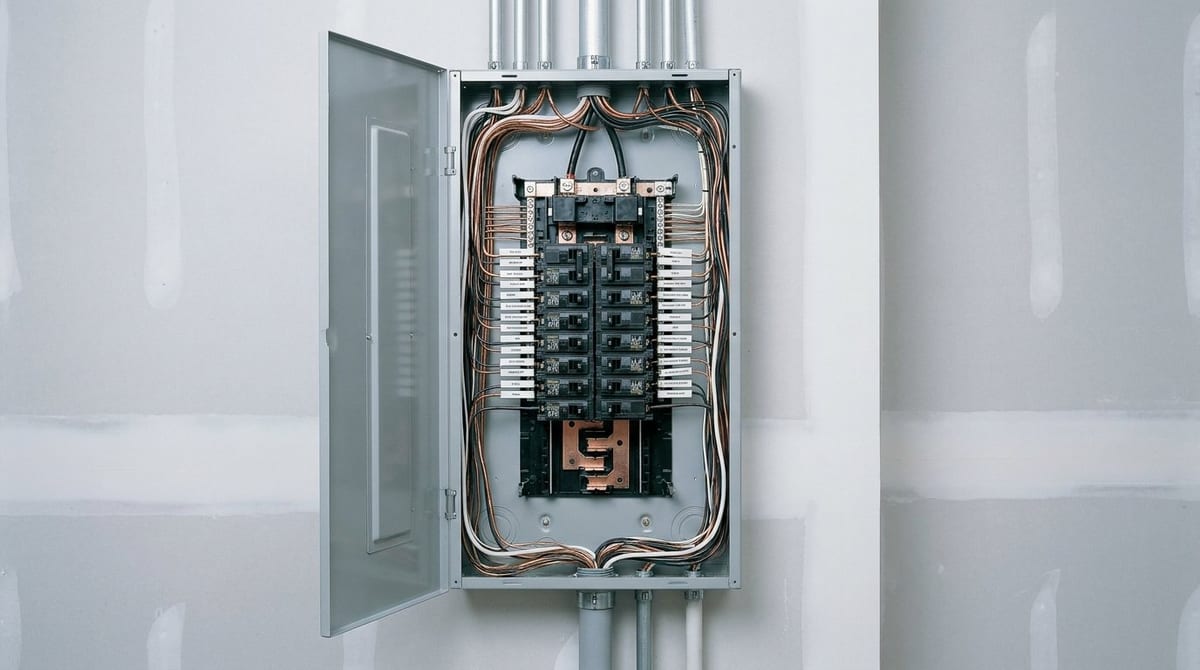
This is the step people skip. A Level 2 charger adds a big continuous load, and many older 100-amp panels don't have the spare capacity, or the open breaker slots, for it. An electrician runs a load calculation to confirm your panel can support the charger; if not, you may need a panel or service upgrade first, or a load-management device that shares capacity.
Installation and hardwired vs. plug-in
A Level 2 charger is installed on a dedicated 240V circuit — hardwired, or plugged into a NEMA 14-50 outlet (which itself must be on a proper circuit and, per current code, GFCI-protected). It needs a permit and should be installed by a licensed electrician for safety and warranty. Placement (a garage wall near the car's port) and cable length matter too. See electrical cost and our EV charger installation.
| Level 1 (120V) | Level 2 (240V) | |
|---|---|---|
| Speed | ~3–5 mi/hr | ~20–40+ mi/hr |
| Outlet | Standard plug | Dedicated 240V circuit |
| Install | Plug in | Electrician + permit |
| Best for | PHEV / low mileage | Most full EVs |
| Panel impact | Minimal | Needs spare capacity |
You can DIY
- Decide Level 1 vs Level 2
- Match amperage to your car
- Pick a charger location
- Plan cable length to the port
- Confirm your EV's max charge rate
Call a pro
- Installing the 240V circuit
- A panel load calculation
- Any needed panel/service upgrade
- Hardwiring or a NEMA 14-50 outlet
- Permit and inspection
The most common EV-charging mistake is buying a charger before confirming the home can power it. Best practice is to have an electrician run a load calculation on your panel, size the dedicated 240V circuit to the charger and your car's max rate, and handle the permit and install. Get that right and you charge fully overnight, safely; skip it and you risk an overloaded panel or a charger that can't run at full speed.
EV charging in North Texas homes
EV adoption is climbing across DFW, and Level 2 installs — often paired with a panel upgrade on older homes — are a growing request across Plano, Frisco, and Allen. We do the load calculation, install the dedicated circuit, and handle the permit. See our electrical team.
The short version
- Level 1 (120V) adds ~3–5 miles/hour — slow; Level 2 (240V) adds ~20–40+ — the standard.
- Most EV owners install a Level 2 charger on a dedicated 240V circuit.
- Higher amperage charges faster, if your car and circuit support it.
- Check your panel has spare capacity first — older 100-amp panels often don't.
- A Level 2 charger needs a permit and a licensed electrician to install.
- Match the charger to your car's max charge rate to avoid paying for unused speed.
Home EV chargers — frequently asked questions
Adding a home EV charger?
Get a load check and a code-compliant Level 2 install. Serving Dallas–Fort Worth & North Texas for over 25 years.