
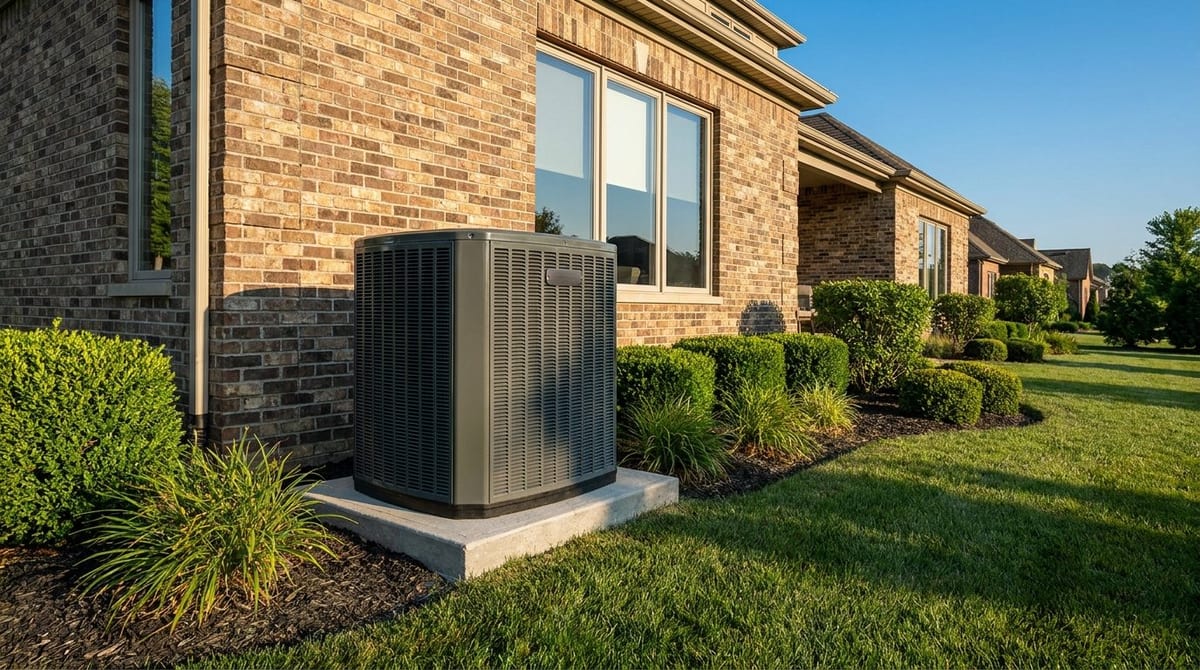
Why is my AC not blowing cold air?
A Texas homeowner's troubleshooting guide — the usual culprits and how to fix them.
By The T.A.P. Team · July 2024 · 7 min read
If your AC is running but blowing warm air, it's almost always one of five things: a clogged air filter, a frozen evaporator coil, low refrigerant from a leak, a tripped breaker at the outdoor unit, or a thermostat set wrong. In a Texas summer, a dirty filter and a frozen coil are the two you'll hit most. Here's how to tell them apart and fix what you safely can.
- 1Thermostat on COOL and AUTO, set below room temp? Swap the batteries.
- 2Air filter — can you see light through it? If not, replace it.
- 3Outdoor fan spinning? If it's dead silent, check the breaker.
- 4Ice on the copper lines or coil? Shut it off and let it thaw.
- 5Supply vents open and the return isn't blocked?
Start with the air filter — it's the #1 cause
More no-cool calls trace back to a clogged filter than anything else. When the filter chokes, airflow across the evaporator coil drops, the coil gets too cold, and cooling falls off a cliff. Texas summers make it worse — long runtimes and fine dust load a filter fast. Change it every 30 days in July and August, and every 60–90 days the rest of the year. A $15 filter is the cheapest fix in this guide, and it's the first thing checked on any AC service call.
When the evaporator coil freezes over
Here's the counterintuitive one: an iced-over AC blows warm. Starve the coil of airflow — usually with that dirty filter — and it freezes solid, and ice is a terrible conductor of the heat your system is trying to remove. If you spot frost on the copper lines or indoor coil, shut the system off, set the fan to ON, and let it thaw. Running a frozen system can damage the compressor. We cover it in depth in why is my AC freezing up.
Low refrigerant almost always means a leak
If airflow is good and the coil is clear but the air still isn't cold, the likeliest cause is low refrigerant — and that's where DIY should stop. A sealed system doesn't "use up" refrigerant; a low charge means it's leaking. Topping it off buys a few weeks and leaves the leak behind, so best practice is to find and seal the leak, then recharge to spec. If yours needs a recharge every summer, it's leaking — and it may be time to weigh a new system.
Electrical: capacitors, contactors, and breakers
A dead-silent outdoor unit usually points at electrical. Reset a tripped breaker once; if it trips again, stop — repeated trips signal a real fault. A unit that hums but won't start is a classic failed run capacitor, an inexpensive part that fails often in extreme heat. If nothing happens at all, work through why won't my AC turn on first.
Drainage and the outdoor coil
Two easy-to-miss culprits round out the list. When the condensate drain clogs, a float safety switch shuts the system down to keep water off your ceiling — clearing the line brings it back. Outside, a condenser coil caked with grass clippings or cottonwood can't reject heat, so the system runs without cooling. With the power off, a gentle rinse restores airflow.
| Symptom | Likely cause | What to do |
|---|---|---|
| Warm air, weak airflow | Dirty filter | Replace the filter |
| Frost on lines or coil | Frozen coil | Shut off, thaw, then diagnose |
| Warm air, good airflow | Low refrigerant | Call a pro — it's a leak |
| Outdoor unit silent | Capacitor / breaker | Reset breaker, then call a pro |
| Keeps shutting off | Clogged drain | Clear the condensate line |
| Warm after a hot week | Dirty outdoor coil | Gently rinse the condenser |
You can DIY
- Replace the air filter
- Thermostat batteries + settings
- Reset a tripped breaker (once)
- Rinse the outdoor coil
- Clear the drain line
Call a pro
- Refrigerant / leak repair
- A coil that keeps re-freezing
- Capacitor or compressor
- Any electrical work
- A breaker that trips repeatedly
The right diagnosis follows one order — airflow, refrigerant charge, coil temperature, then electrical — before anyone touches refrigerant. Adding a pound of refrigerant without finding the leak is a patch that leaves the real problem in place. Do it in order and you fix it once.
Why a DFW summer makes it worse
Everything above is routine — but 100°-plus heat is what turns a marginal capacitor or a slightly low charge into a no-cold-air afternoon. Afternoon sun load, long runtimes, and undersized ductwork all pile on, and peak season is when same-day help gets scarce. Homeowners across Plano, Frisco, McKinney, and Allen feel it first. If your unit is past 12–15 years and struggling every July, read up on when to replace an AC in Texas.
The short version
- No cold air is almost always airflow first: a clogged filter is the #1 cause — change it every 30 days in peak summer.
- Ice on the coil makes an AC blow warm; shut it off, run the fan, and let it thaw before restarting.
- If airflow and the coil are fine, low refrigerant (a leak) is likely — a licensed-pro fix, not a DIY top-off.
- A silent outdoor unit usually means a tripped breaker or a failed capacitor.
- A clogged condensate drain or a dirty outdoor coil can also stop cooling — both are easy to clear.
- Diagnose in order — airflow, charge, coil, electrical — before anyone touches refrigerant.
AC not blowing cold air — frequently asked questions

AC still blowing warm?
Get a free diagnosis and an honest fix from a licensed DFW team. Serving Dallas–Fort Worth & North Texas for over 25 years.