
Wood vs. metal fence: which is right for you?
Privacy and price vs. security and longevity — how to choose.
By The T.A.P. Team · March 2024 · 6 min read
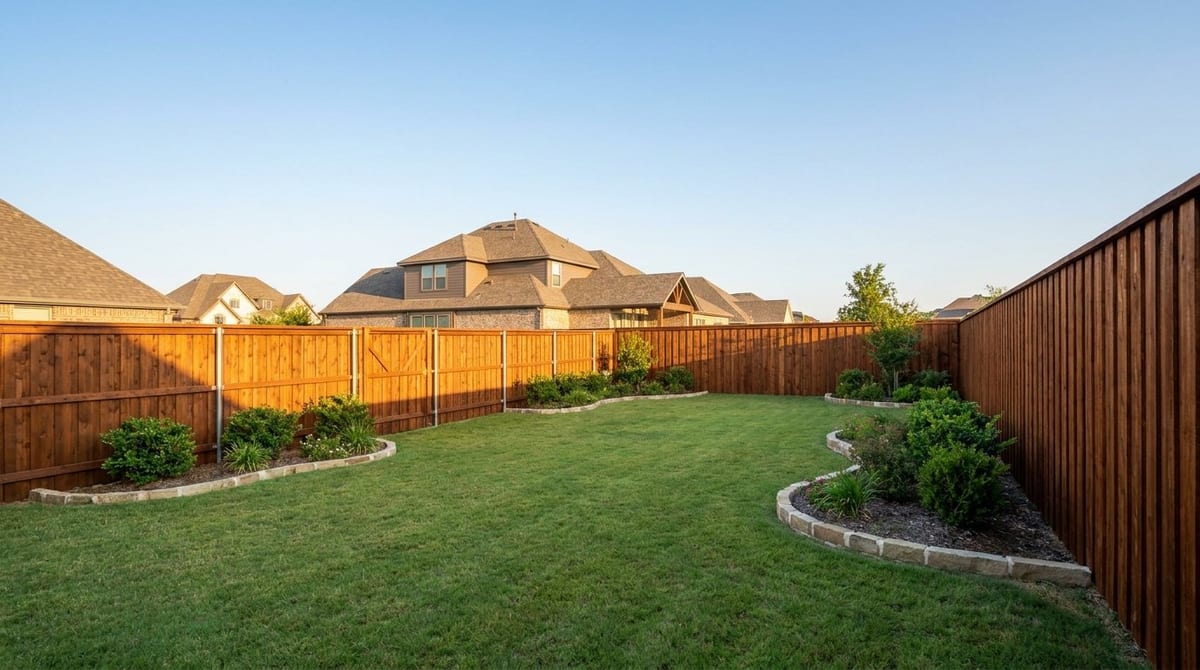
The wood-versus-metal fence choice usually comes down to what you want the fence to do. Wood gives you privacy and a lower price; metal — typically wrought iron or steel — gives you security, open views, and a fence that can last decades with little upkeep. Many Texas homes use both: wood for backyard privacy, ornamental iron out front or around a pool. Here's how they compare.
- Wood: privacy, lower cost, needs staining
- Metal (iron): security, views, long life
- Wood ~15–20 yrs; iron can last decades
- Iron doesn't block views (or nosy neighbors)
- Pool codes often favor metal fencing
Privacy vs. visibility
This is the core trade-off. A wood privacy fence blocks sightlines completely — ideal for a backyard. An ornamental iron or steel fence is largely see-through, which is a feature out front (curb appeal, an open feel) and around pools (safety codes plus you can watch the water), but not for privacy. What the fence is for usually settles the material.
Cost and lifespan
Wood is cheaper to install; metal costs more up front but lasts far longer with minimal maintenance — decades for quality wrought iron or galvanized steel, versus 15–20 years for wood (see wood fence lifespan). Over the long run the cost gap narrows as you factor in wood's staining and eventual replacement.
Maintenance
Wood needs periodic staining or sealing (every few years) to fight UV and rot — see how to stain a fence. Metal is low-maintenance: an occasional wash and, for iron, touching up any rust spots or scratches to keep corrosion away. Aluminum and coated steel resist rust well.
Which should you choose?
Choose wood for backyard privacy on a budget. Choose ornamental metal for security, curb appeal, unobstructed views, or a pool enclosure. And consider both — wood where you want privacy, iron where you want to see through — which is exactly what a lot of DFW homes do. See fence cost.
| Wood | Metal (iron/steel) | |
|---|---|---|
| Privacy | Full | See-through |
| Cost | Lower | Higher |
| Lifespan | 15–20 years | Decades |
| Maintenance | Stain every few years | Low (touch up rust) |
| Best for | Backyard privacy | Security, views, pools |
There's no single "better" fence — wood and metal are simply good at different jobs. The right call is to match the material to what each stretch of fence needs to do: privacy in back, security and sightlines in front or around a pool. Buying one material for the whole property when your needs differ by area is how homeowners end up compromising on both privacy and looks.
Fencing choices in North Texas
A lot of DFW homes pair a cedar privacy fence in back with ornamental iron out front or around the pool — the best of both. We install wood and metal fencing across Southlake, Flower Mound, and Frisco, and can advise on pool-code requirements. See our fence team.
The short version
- Wood gives privacy at a lower cost; metal gives security, views, and long life.
- A wood privacy fence blocks sightlines; ornamental iron is see-through.
- Wood lasts 15–20 years; quality iron or steel can last decades.
- Wood needs staining every few years; metal is low-maintenance.
- Pool safety codes often favor metal fencing.
- Many homes use both — wood for backyard privacy, iron out front or at the pool.
Wood vs metal fence — frequently asked questions
Wood, metal, or both?
Get options and pricing for your yard. Serving Dallas–Fort Worth & North Texas for over 25 years.