
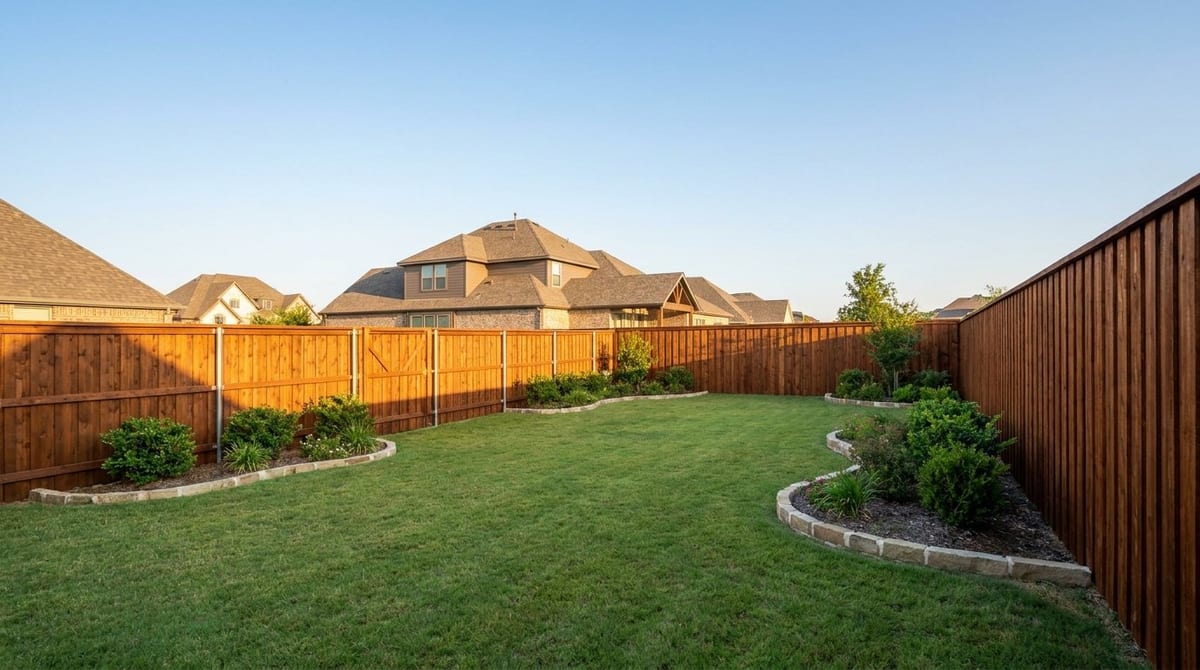
How long does a wood fence last in Texas?
Cedar vs pine lifespans, what shortens them, and how to add years.
By The T.A.P. Team · September 2024 · 6 min read
A wood fence in Texas lasts roughly 15 to 20 years for cedar and 10 to 15 for treated pine — but the real lifespan depends on the wood, the posts, and whether it's ever sealed. Our intense sun, heat, and expansive clay soil are hard on fences: sun grays and cracks boards, and shifting soil heaves posts. The good news is that a few choices at install, plus occasional staining, can push a fence to the top of that range.
- Cedar fence: ~15–20 years
- Treated pine: ~10–15 years
- Posts usually fail first (rot at ground line)
- Sun and clay soil shorten fence life
- Staining every few years adds years
Cedar vs pine (and why posts matter most)
Cedar naturally resists rot and insects, so it outlasts pine — 15–20 years vs 10–15 for pressure-treated pine. But whatever the pickets are, the posts usually fail first: they rot at the ground line or heave in our clay soil. That's why post material and setting matter more than almost anything for how long a fence stands. Compare woods in best wood for a Texas fence.
What Texas does to a fence
Relentless UV bleaches wood gray and dries it until it cracks, cups, and splits. Summer heat and big swings in humidity make boards expand and contract. And expansive clay soil — the same soil behind our foundation and slab-leak issues — swells and shrinks, pushing posts out of plumb over the years. It's a tough environment for wood.
How to make it last longer
Three things add real years: set posts in concrete (proper depth and drainage), use cedar or quality treated posts, and seal or stain the fence every 2–4 years to block UV and moisture. Keeping sprinklers from constantly soaking the wood and trimming vegetation off the fence helps too. See how to stain or seal a fence.
When it's near the end
Widespread gray, cracked, or rotting boards, posts you can wiggle, and sections leaning after storms mean the fence is aging out. A few bad boards or one leaning post can be repaired; when rot and lean are everywhere, replacement is usually the better spend — see repair vs replacement.
| Fence part / type | Typical Texas lifespan |
|---|---|
| Cedar pickets | 15–20 years |
| Treated pine pickets | 10–15 years |
| Cedar/treated posts | 15–20+ years |
| Untreated posts | Fail first (rot/heave) |
| With regular staining | Toward the high end |
A fence stands or falls on its posts — literally. The single best thing you can do for longevity is set quality posts (cedar or treated) properly in concrete, then protect the pickets with stain every few years. Homeowners often spend on nicer pickets and skimp on posts; in our clay soil and heat, that's backwards. Good posts and periodic sealing are what get a fence to 20 years.
Fences and North Texas clay
DFW's expansive clay heaves fence posts the same way it stresses foundations, and our sun is brutal on unsealed wood — so local fences need good posts and periodic staining more than most. We build and repair fences across Frisco, Plano, and McKinney. See our fence installation team.
The short version
- A cedar fence lasts about 15–20 years in Texas; treated pine 10–15.
- Posts usually fail first — from rot at the ground line or heaving in clay soil.
- Intense UV and heat gray, crack, and cup unsealed boards.
- Setting quality posts properly in concrete matters most for longevity.
- Staining or sealing every 2–4 years blocks UV and moisture and adds years.
- Widespread rot, gray boards, and leaning sections mean it's aging out.
Wood fence lifespan — frequently asked questions
Fence near the end?
Get a free assessment and honest repair-or-replace advice. Serving Dallas–Fort Worth & North Texas for over 25 years.