
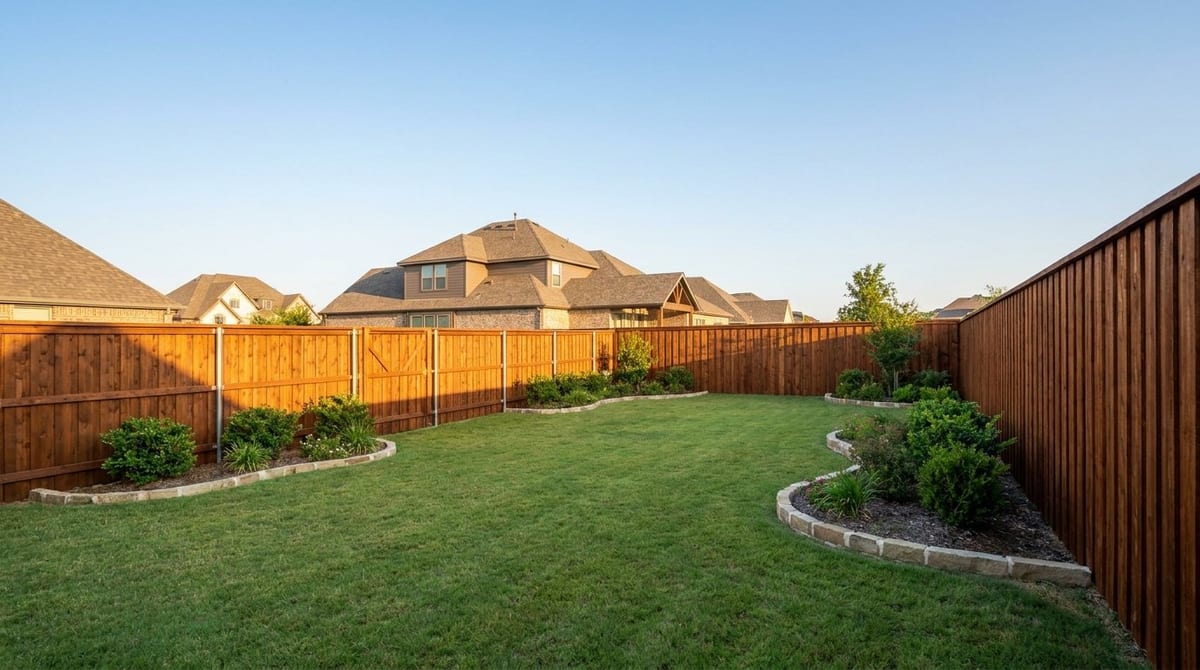
The best wood for a fence in Texas
Cedar, treated pine, or redwood — what holds up to our heat and soil.
By The T.A.P. Team · April 2024 · 6 min read
For most Texas homes, cedar is the best all-around fence wood — it naturally resists rot, insects, and the warping our heat causes, and it weathers to a handsome gray. Pressure-treated pine is the budget choice and holds up decently, especially for posts, while redwood is beautiful but pricey and less common here. The best setup for many fences: cedar pickets on treated or cedar posts. Here's how the woods compare.
- Cedar: best all-around (rot/insect/warp resistant)
- Treated pine: budget-friendly, good for posts
- Redwood: beautiful but expensive here
- Cedar pickets + treated posts = a common sweet spot
- Seal any wood to fight Texas UV
Why cedar wins in Texas
Cedar contains natural oils that resist rot and insects, and it's dimensionally stable — it warps, cups, and splits less than pine as our humidity and temperature swing. It handles the Texas sun better and ages to an attractive silver-gray if left unsealed (or holds stain well if you want to keep the color). It costs more than pine but lasts longer, which is why it's the go-to picket around here.
Pressure-treated pine: the budget option
Treated pine is chemically protected against rot and termites and costs less than cedar, making it a popular budget pick. Its weakness is stability — it's more prone to warping, cupping, and cracking in our heat as it dries. It shines as a post material (treated for ground contact) and as a lower-cost picket if you're willing to maintain it.
Redwood and other options
Redwood is gorgeous and naturally durable but expensive and less available in Texas, so it's uncommon for full fences here. Composite and vinyl are non-wood alternatives with their own trade-offs (low maintenance, higher cost, a different look). For most homeowners the real decision is cedar vs. treated pine.
The smart combination
A very common, cost-effective approach: cedar pickets (for looks and longevity above ground) on pressure-treated or cedar posts (for ground-contact rot resistance). It balances cost and durability, and — with staining every few years — gets you the long end of a fence's life. See how long a wood fence lasts.
| Wood | Best for |
|---|---|
| Cedar | Best all-around; pickets |
| Treated pine | Budget; posts + pickets |
| Redwood | Looks; costly here |
| Cedar pickets + treated posts | Common sweet spot |
| Any wood | Seal it against UV |
The best-value wood fence in our climate usually isn't all one species — it's cedar pickets for above-ground looks and rot resistance, set on pressure-treated posts rated for ground contact, then sealed every few years. That combination puts the right material where each job demands it and, with a little maintenance, delivers the longest life for the money.
What we build in North Texas
Cedar is by far the most popular fence wood across DFW for good reason — it takes our heat and humidity swings better than pine. We build cedar and treated-pine fences across Plano, Allen, and Southlake, and help you balance looks, longevity, and budget. See our fence installation team.
The short version
- Cedar is the best all-around fence wood for Texas — rot, insect, and warp resistant.
- Treated pine is the budget choice and makes excellent ground-contact posts.
- Redwood is beautiful but expensive and uncommon in Texas.
- A common sweet spot: cedar pickets on treated or cedar posts.
- Cedar ages to a handsome gray or holds stain well if you want color.
- Seal any wood fence every few years to fight the Texas sun.
Best fence wood — frequently asked questions
Picking your fence wood?
Get honest advice and a free estimate on cedar or treated pine. Serving Dallas–Fort Worth & North Texas for over 25 years.