
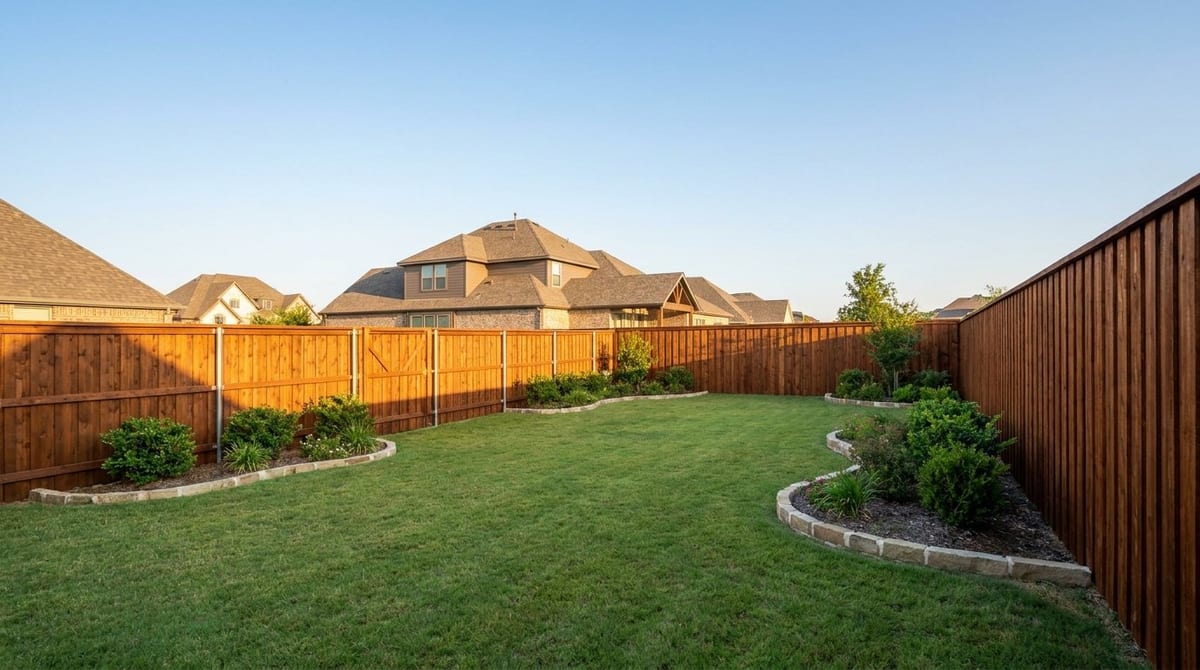
How tall can a fence be in Texas?
City code, front-vs-back limits, and HOA rules — check before you build.
By The T.A.P. Team · May 2024 · 6 min read
In most Texas cities, you can build a fence up to about 6 feet tall in a backyard and 3 to 4 feet in a front yard — but the exact limits, permit requirements, and corner-lot sightline rules are set by your city and, often more strictly, your HOA. Going taller usually needs a variance. Before you build, a five-minute check of your city code and HOA rules saves you from a rebuild. Here's what to look for.
- Backyard: usually up to 6 ft
- Front yard: usually 3–4 ft
- Corner lots: sightline (visibility) limits
- Permit may be required — check your city
- HOA rules can be stricter than the city
The common limits
Most North Texas municipalities cap residential fences at around 6 feet in the rear and side yards and 3–4 feet in the front, where lower heights keep sightlines open. Some cities allow up to 8 feet in back with a permit. These are typical, not universal — every city writes its own code, so treat these as a starting point, not the rule.
Corner lots and sightlines
Corner lots have extra restrictions: a "visibility triangle" near the intersection must stay low (often 2–3 feet) so drivers can see. If your lot fronts two streets, more of your fence may be treated as "front yard" with the lower limit. These sightline rules are strict because they're about safety.
Permits and your HOA
Many cities require a permit for a new fence (and sometimes for replacement), which is where they check height and placement. Just as important, your HOA often has its own — usually stricter — rules on height, style, materials, and even stain color, and HOA approval is typically required before you build. Ignoring the HOA can mean a forced rebuild.
How to check before you build
Look up your city's fence code (usually on the city website) or call the permit office, and read your HOA's architectural guidelines and submit for approval. Confirm setbacks, height, corner-lot rules, and whether a survey is needed. A reputable fence contractor builds to code and can help you navigate it — see our fence installation services.
| Location | Typical height limit |
|---|---|
| Backyard / side | Up to ~6 ft (8 ft w/ permit in some cities) |
| Front yard | ~3–4 ft |
| Corner-lot sightline | ~2–3 ft (visibility triangle) |
| Permit | Often required — check your city |
| HOA | May be stricter; approval needed |
The costliest fence mistake is building without checking both your city code and your HOA — because either can force you to tear down and redo a non-compliant fence. Best practice is to confirm height, setbacks, and corner-lot rules with the city and get written HOA approval before the first post goes in. A contractor who builds to code protects you from an expensive do-over.
Fence rules across the DFW metroplex
Every DFW city and HOA writes its own fence rules, and suburbs like Southlake, Flower Mound, and Frisco often have detailed HOA standards on height, style, and materials. We build to local code and help homeowners navigate permits and approvals. See our fence team.
The short version
- Most Texas cities allow ~6-foot fences in back and 3–4 feet in front yards.
- Some cities allow up to 8 feet in back with a permit.
- Corner lots have visibility-triangle rules that keep the fence low near the street.
- Many cities require a permit for a new (or replacement) fence.
- Your HOA's rules are often stricter than the city's and need approval first.
- Check both the city code and HOA before you build to avoid a forced rebuild.
Fence height rules — frequently asked questions
Planning a new fence?
We build to local code and help with permits and HOA approval. Serving Dallas–Fort Worth & North Texas for over 25 years.