
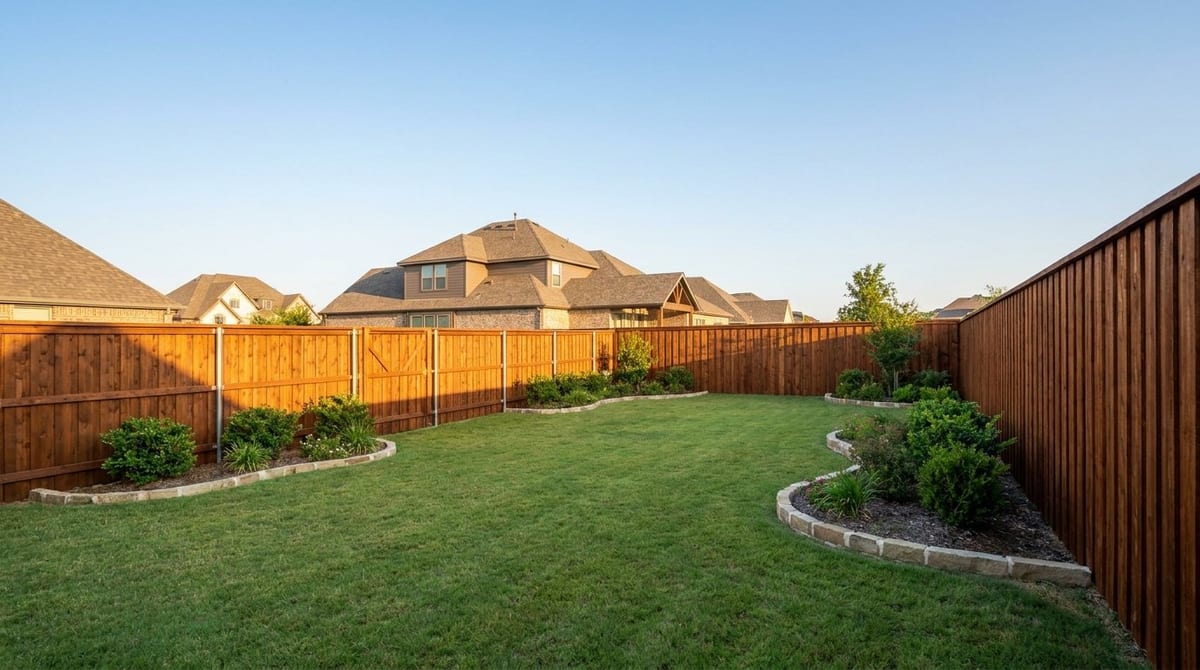
How deep should fence posts be?
The 1/3 rule, concrete, and why clay soil makes depth critical.
By The T.A.P. Team · June 2024 · 5 min read
The rule of thumb for fence posts is to set them about one-third of the above-ground height into the ground — so for a standard 6-foot fence, roughly 2 feet deep, in concrete. In North Texas, getting this right matters even more than usual, because our expansive clay soil heaves posts that aren't set deep and solid. Depth, hole shape, and how you finish the concrete all decide whether a fence stands straight for 20 years or leans in 5.
- Depth: ~1/3 of above-ground height
- 6-ft fence: ~2 ft deep
- Set in concrete, below the movement zone
- Crown the concrete so water sheds off
- Wider hole at the bottom resists heave
The one-third rule
Set at least a third of the total post length in the ground. A 6-foot fence uses ~8-foot posts with about 2 feet buried; a taller fence needs proportionally deeper posts. Deeper is better for stability, especially for gate and corner posts, which take more load and should go deeper than line posts.
Concrete and hole shape
Set posts in concrete, not just tamped dirt, for a fence that resists wind and lasts. Dig the hole a bit wider at the bottom than the top (bell-shaped) so the concrete footing resists being pushed up by heaving soil. Add a few inches of gravel at the base for drainage so water doesn't pool against the post and rot it.
Why clay soil makes depth critical
DFW's expansive clay swells when wet and shrinks when dry, and that movement lifts and tilts shallow posts — the leading cause of leaning fences here. Setting posts deep enough (below the most active soil movement) and in a proper footing is the defense. It's why cutting depth to save time is a false economy in our soil.
Finish it right
Crown the concrete — slope the top away from the post — so water runs off instead of pooling at the wood. Use treated or cedar posts rated for ground contact, and let the concrete cure before hanging pickets or a gate. Done this way, the posts — the part that usually fails first — get the best shot at a long life. See wood fence lifespan.
| Fence height | Post depth (rule of thumb) |
|---|---|
| 4 ft | ~1.5 ft |
| 6 ft | ~2 ft |
| 8 ft | ~2.5–3 ft |
| Gate/corner posts | Deeper than line posts |
| All posts | In concrete, crowned to drain |
You can DIY
- Dig ~1/3 the post height
- Bell the hole wider at the bottom
- Add gravel for drainage
- Set in concrete, post plumb
- Crown the concrete to shed water
Call a pro
- Long or tall fence runs
- Gate and corner posts
- Rocky or difficult digging
- Setting posts right in heaving clay
- Any fence that keeps leaning
The posts are the part of a fence that fails first, and depth plus drainage decide their fate. Set them a third of the way in, in a properly shaped concrete footing crowned to shed water, using ground-contact-rated wood. In our expansive clay, that's the single biggest thing separating a fence that stays straight for 20 years from one you're resetting in 5. Never shortcut the posts.
Setting posts in North Texas clay
Our expansive clay is unforgiving of shallow, poorly-set posts — it heaves them until the fence leans. We set posts to proper depth in crowned concrete footings across Plano, Allen, and McKinney, so fences stand straight for the long haul. See our fence installation team.
The short version
- Set fence posts about one-third of their above-ground height deep.
- A 6-foot fence needs posts roughly 2 feet in the ground.
- Set them in concrete, not just packed dirt, for wind and longevity.
- Bell the hole wider at the bottom so the footing resists heaving.
- Crown the concrete to shed water and use ground-contact-rated wood.
- In DFW's clay soil, proper depth and drainage are what keep a fence from leaning.
Fence post depth — frequently asked questions
Want posts set right?
Get a fence built to stand straight in Texas clay. Serving Dallas–Fort Worth & North Texas for over 25 years.