
Why is my outlet not working?
Usually a tripped GFCI or breaker — the safe checks, in order.
By The T.A.P. Team · April 2024 · 5 min read
A single dead outlet usually has a simple, safe cause: a tripped GFCI (sometimes in another room), a tripped breaker, a wall switch that controls it, or a loose connection. Most of these you can check yourself in a few minutes. But an outlet that's dead along with heat, scorching, or a burning smell is a different story — that's a fire-risk warning. Here's the safe order to check, and when to stop and call an electrician.
- 1Is a GFCI tripped? Reset it (check other rooms too).
- 2Is the breaker for that circuit tripped? Reset once.
- 3Is the outlet switched? Try the nearby wall switch.
- 4Test other outlets — one dead, or several?
- 5Any scorching, heat, or burning smell? Stop; call a pro.
Check the GFCI first
A dead outlet is very often downstream of a tripped GFCI — and the GFCI protecting it may be in another room (a garage, bathroom, or the outdoor outlet). Walk the house, find any GFCI with a popped RESET button, and reset it. This single check solves a huge share of "dead outlet" calls.
Check the breaker and the switch
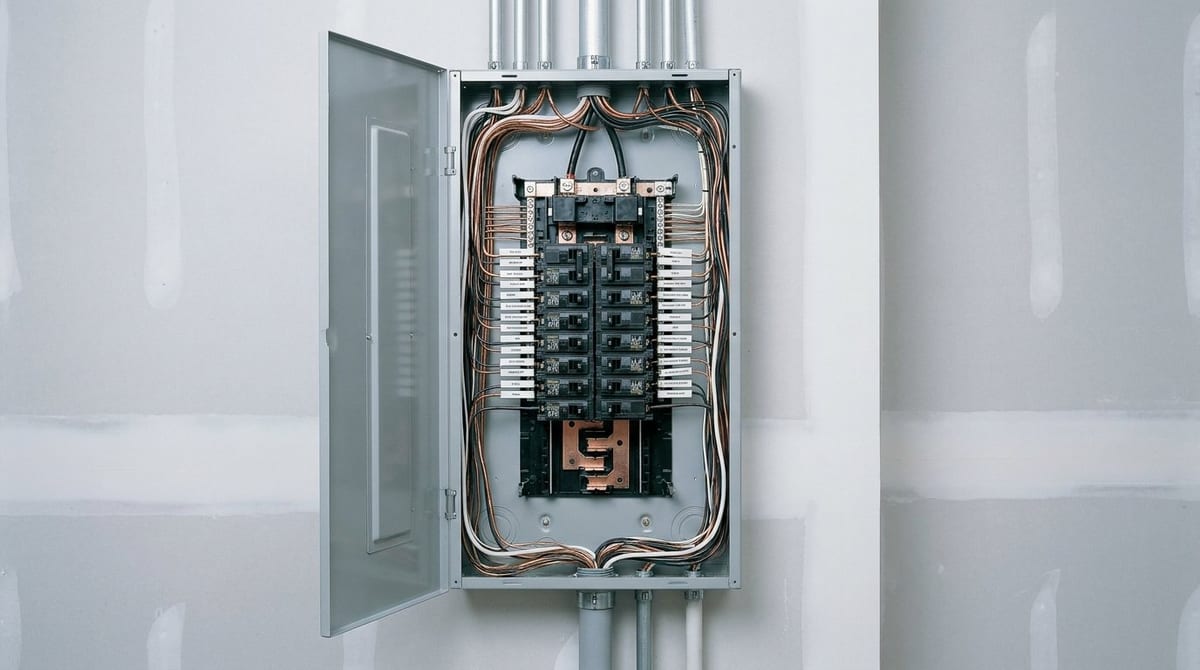
Next, look at the panel for a tripped breaker on that circuit and reset it once (if it won't hold, see why breakers trip). Also check whether the outlet is "switched" — many rooms have an outlet (or half of one) controlled by a wall switch for a lamp. Flipping that switch may be all it needs.
A loose or worn connection
If nothing is tripped, the outlet itself or its wiring may have a loose connection — common with older "backstab" outlets where wires push into the back rather than screw to the terminals. A worn outlet that no longer grips plugs is also due for replacement. These are simple parts, but the work is inside a live box, so know your limits.
When a dead outlet is dangerous
Stop and call an electrician if a dead outlet comes with warmth, scorch marks, or a burning smell — that points to arcing and overheating, a fire risk (see warm or sparking outlets). If several outlets or half a circuit go dead together, it can signal a loose neutral or a wiring fault that needs professional diagnosis.
| Symptom | Likely cause | What to do |
|---|---|---|
| One outlet dead, others fine | Tripped GFCI | Find and reset the GFCI |
| A room/area is dead | Tripped breaker | Reset the breaker once |
| Outlet dead until a switch is on | Switched outlet | Try the wall switch |
| Outlet loose / worn | Bad connection or outlet | Replace the outlet |
| Dead + warm/scorched | Overheating fault | Cut power; call a pro |
You can DIY
- Find and reset a tripped GFCI
- Reset a tripped breaker once
- Check for a controlling wall switch
- Test nearby outlets
- Replace a worn outlet (if experienced)
Call a pro
- Any warm, scorched, or burning outlet
- Several outlets or half a circuit dead
- A breaker that keeps tripping
- Aluminum or old cloth wiring
- Anything you're unsure about
Most dead outlets are a harmless reset (GFCI or breaker) or a switched outlet, and those are safe to check. But the moment a dead outlet involves warmth, scorching, buzzing, or a burning smell, the story changes — that's overheating, and it's how electrical fires start. Reset the easy stuff; if there's any sign of heat, cut the power and call a licensed electrician.
Backstabbed outlets in older DFW homes
A lot of North Texas homes were wired with fast "backstab" outlet connections that loosen over time, so a single dead or intermittent outlet is a common call across Plano, Garland, and Richardson. We track down dead outlets and replace failing connections safely. See our electrical team.
The short version
- A single dead outlet is most often a tripped GFCI — sometimes in another room.
- Check the breaker and any wall switch that might control the outlet.
- A loose "backstab" connection or a worn outlet is a common cause in older homes.
- A dead outlet with warmth, scorching, or a burning smell is a fire-risk warning.
- Several outlets dead together can mean a loose neutral — call a pro.
- Reset the easy things; if there's any heat, cut power and call an electrician.
Dead outlet — frequently asked questions

Outlet still dead?
Get a licensed electrician to find and fix the fault. Serving Dallas–Fort Worth & North Texas for over 25 years.