
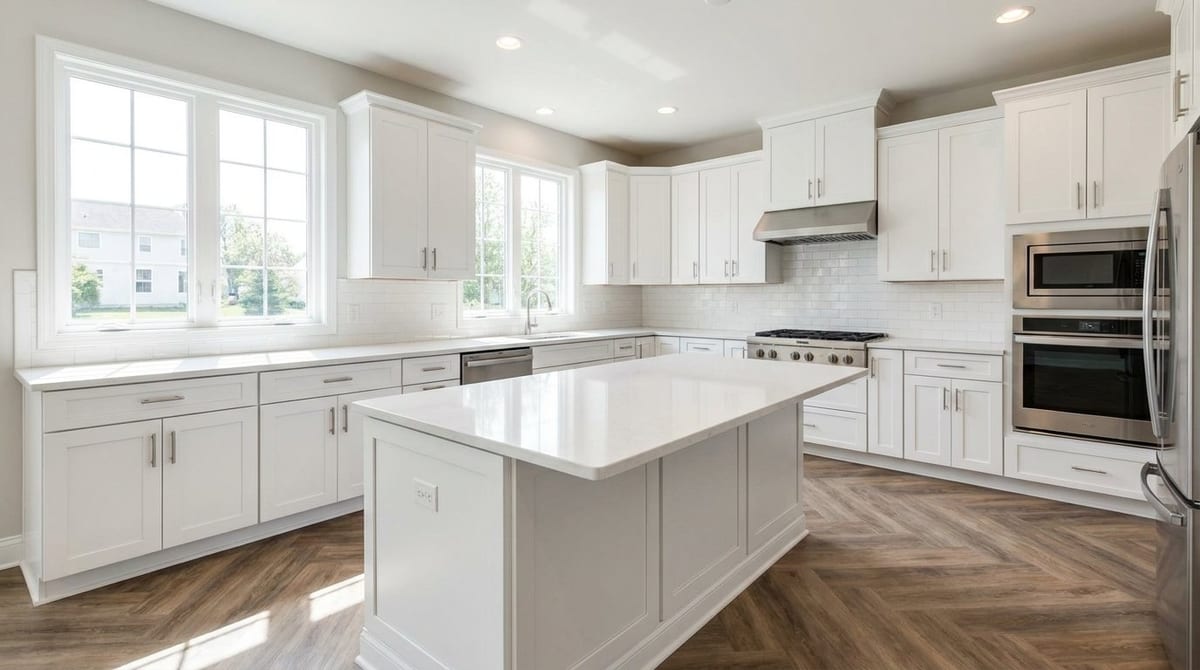
Quartz vs granite countertops
Engineered and low-maintenance vs. natural and one-of-a-kind.
By The T.A.P. Team · February 2024 · 6 min read
Quartz and granite are the two heavyweight countertop choices, and the right one depends on how you use your kitchen and the look you want. In short: quartz is an engineered stone that's non-porous, low-maintenance, and consistent in pattern, while granite is a natural stone that's completely one-of-a-kind and extremely heat-tough but needs periodic sealing. Both are excellent, durable surfaces. Here's how quartz and granite really compare so you can choose with confidence.
- Quartz: engineered, non-porous, low-maintenance
- Granite: natural stone, every slab unique
- Quartz patterns are consistent; granite varies
- Granite handles heat better; quartz resists stains better
- Granite needs sealing; quartz never does
What each one actually is
Granite is 100% natural stone, quarried and cut into slabs, so every piece has a unique pattern and no two kitchens look exactly alike. Quartz is engineered — roughly 90% ground natural quartz bound with resins and pigments — which makes it non-porous and lets manufacturers produce consistent colors and patterns, including looks that mimic marble. That core difference, natural vs engineered, drives everything else.
Durability and maintenance
Both are very hard and scratch-resistant, but they differ in care. Granite is porous, so it needs sealing when installed and periodically after (a simple water-drop test tells you when), and unsealed granite can stain or harbor bacteria. Quartz is non-porous, so it never needs sealing and shrugs off stains and bacteria — the lower-maintenance option. The trade-off: granite handles high heat better, while quartz's resins can scorch, so use a trivet on quartz.
Look, cost, and resale
If you want a natural, unique surface with dramatic veining and movement, granite delivers something no two of which are alike. If you want a specific consistent color, a marble look without marble's fragility, or minimal upkeep, quartz wins. Pricing overlaps heavily and depends more on the specific stone and grade than on the category. Both are premium surfaces buyers recognize, so both support resale value.
How to choose
Match the counter to your kitchen. Cook a lot and set hot pans down? Granite's heat tolerance is a real plus. Want the lowest maintenance and a precise, consistent look? Go quartz. Then let it guide the rest of your kitchen plan and your backsplash choice. Our kitchen team can show you slabs and samples in your space.
| Factor | Quartz | Granite |
|---|---|---|
| Material | Engineered stone | Natural stone |
| Maintenance | None (non-porous) | Periodic sealing |
| Heat resistance | Use a trivet | Excellent |
| Pattern | Consistent | Unique per slab |
| Stain resistance | Excellent | Good, once sealed |
Neither surface is "better" in the abstract — the right choice is the one that fits your habits. Heavy cooks who put hot cookware straight on the counter lean granite for its heat tolerance; busy families who want zero maintenance and a precise, consistent look lean quartz. See and touch full slabs (not tiny chips) in your own lighting before deciding, because both look different at scale than on a sample.
Countertops in North Texas kitchens
We install both quartz and granite in kitchen remodels across Frisco, Allen, and Plano, and can bring samples to your home. See our kitchen remodeling team.
The short version
- Quartz is engineered stone; granite is natural stone — that difference drives everything.
- Quartz is non-porous and never needs sealing; granite needs periodic sealing.
- Granite handles high heat better; use a trivet on quartz to protect the resins.
- Quartz has consistent patterns; every granite slab is one-of-a-kind.
- Pricing overlaps and depends more on the specific stone than the category.
- Both are premium, durable surfaces that support resale value — choose by how you use the kitchen.
Quartz vs granite — frequently asked questions
Choosing countertops?
See quartz and granite options for your kitchen. Serving Dallas–Fort Worth & North Texas for over 25 years.