
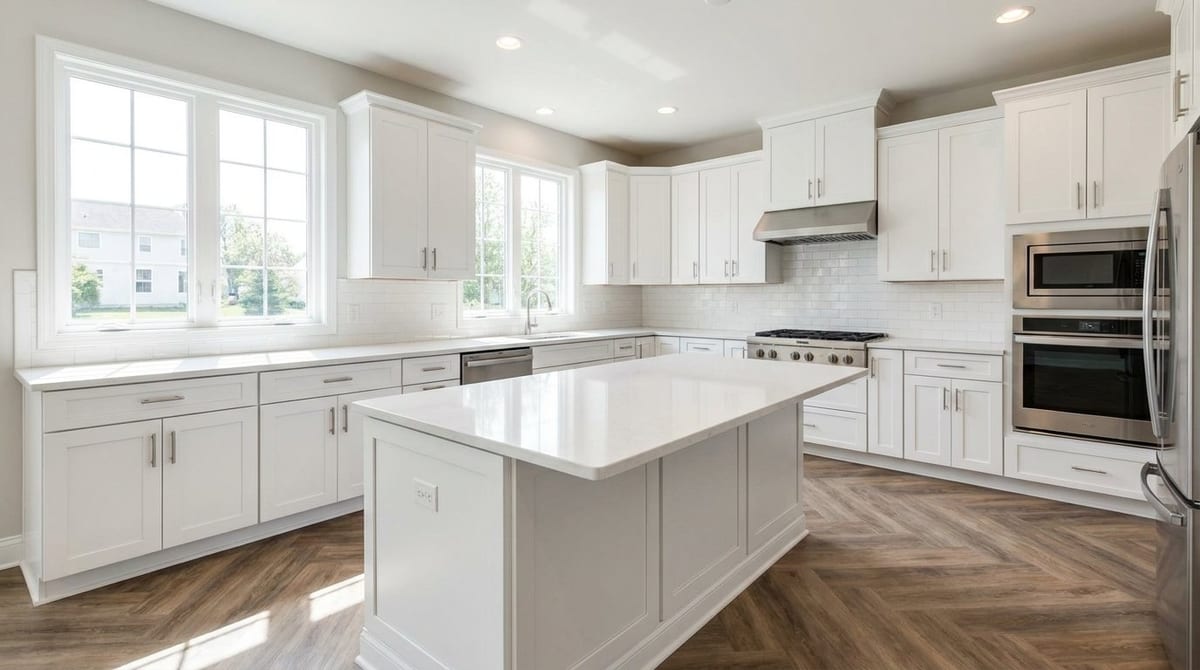
How to choose a kitchen backsplash
Material, coordination, and how high to go.
By The T.A.P. Team · April 2024 · 5 min read
The backsplash is a small area with a big impact — it protects the wall behind your counters and ties the whole kitchen together. Choosing one comes down to three decisions: the material (ceramic tile, glass, natural stone, or a slab), how it coordinates with your countertops and cabinets, and how high you take it. Get those right and the backsplash both works and looks intentional. Here's how to choose a kitchen backsplash you'll be happy with for years.
- Ceramic/porcelain subway tile: classic and affordable
- Glass and mosaic: bright, more of a statement
- Natural stone or a quartz slab: premium, seamless
- Busy countertop → keep the backsplash simple
- Decide the height: standard 4" vs. full-height
Pick a material
Ceramic or porcelain tile — especially classic subway tile — is the affordable, timeless workhorse and by far the most popular. Glass and mosaic tiles add brightness and a more decorative, statement look. Natural stone brings texture and warmth but needs sealing. And a quartz or granite slab backsplash that matches the counter gives a seamless, high-end, grout-free look. Each is a different balance of cost, maintenance, and style.
Coordinate with counters and cabinets
The backsplash has to live with your countertops and cabinets, so coordinate deliberately. A busy, heavily veined countertop (think dramatic granite) usually looks best with a simple, quiet backsplash so they don't fight; a solid, calm counter gives you room for a bolder tile. If you're still choosing surfaces, decide the countertops first, then pick a backsplash that complements them.
Decide how high to go
Height changes the whole feel. The standard is a roughly 4-inch strip along the counter, which is economical and understated. Taking tile all the way up to the underside of the cabinets — and especially full-height behind the range or hood as a focal point — reads more custom and modern but uses more material and labor. Full-height behind the cooktop with a standard strip elsewhere is a popular middle ground.
Think about grout and upkeep
Don't forget the grout: lighter grout on a kitchen backsplash shows stains over time, so many people choose a slightly darker or stain-resistant grout for easy cleaning, or skip grout entirely with a slab. Smooth glazed tile and slabs wipe down easily; textured stone and mosaics have more nooks to clean. Fit the backsplash into your overall kitchen plan and our kitchen team can install it.
| Material | Best for |
|---|---|
| Ceramic subway tile | Timeless look, tight budget |
| Glass / mosaic | Brightness, a statement |
| Natural stone | Warmth and texture (needs sealing) |
| Quartz/granite slab | Seamless, grout-free, premium |
| Full-height tile | A modern focal point behind the range |
You can DIY
- Peel-and-stick or simple subway tile
- Choosing stain-resistant grout
- Coordinating samples with your counters
- Sealing a stone backsplash
Call a pro
- Full tile installation
- Natural stone and slab backsplashes
- Full-height and intricate patterns
- Tying it into a full remodel
The backsplash mistake that dates a kitchen is pairing two busy patterns that compete. Pick your loudest element first — usually the countertop — and let the quieter surfaces support it: a dramatic counter wants a simple backsplash, while a calm counter frees you to make the backsplash the star. Sample materials together in your kitchen's light before committing, since tile and stone read very differently on the wall than in the store.
Backsplashes in North Texas kitchens
From classic subway tile to seamless slab backsplashes, we install them as part of kitchen remodels across Plano, Allen, and Flower Mound. See our kitchen remodeling team.
The short version
- Choose a backsplash by material, coordination with your counters, and height.
- Ceramic subway tile is the affordable, timeless default; glass and stone are more of a statement.
- A quartz or granite slab gives a seamless, grout-free, premium look.
- Pair a busy countertop with a simple backsplash so they don't compete.
- Decide the height: a standard 4-inch strip, up to the cabinets, or full-height behind the range.
- Use stain-resistant grout, or a slab, for easier cleaning.
Choosing a backsplash — frequently asked questions
Ready to refresh your kitchen?
Get a free design consultation and estimate. Serving Dallas–Fort Worth & North Texas for over 25 years.