
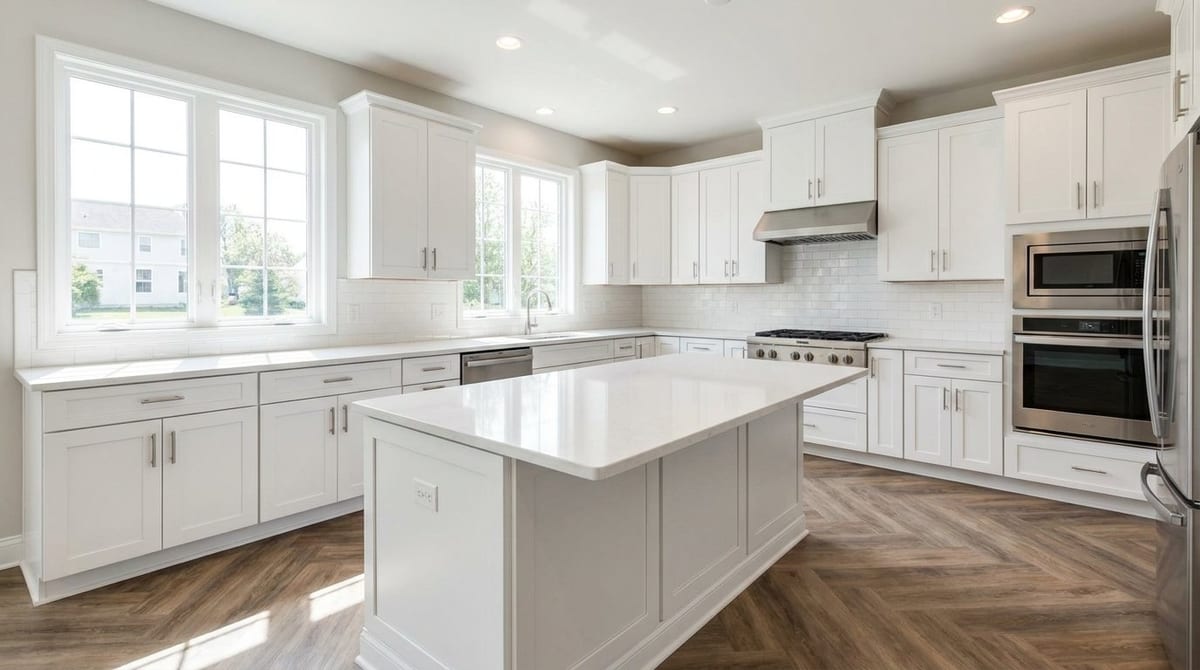
Hardwood vs tile flooring
Warmth and value vs. waterproof durability — where each belongs.
By The T.A.P. Team · April 2024 · 5 min read
Hardwood and tile are both premium, long-lasting floors, but they suit different rooms and priorities. Hardwood is warm, timeless, refinishable, and a genuine resale draw — but it scratches and doesn't like moisture. Tile is waterproof and nearly indestructible — but hard and cold underfoot. Neither is "better"; the smart move is putting each where it shines. Here's how hardwood and tile compare and where each one belongs in a home.
- Hardwood: warm, classic, adds resale value
- Hardwood can be refinished but scratches and hates water
- Tile: waterproof, extremely durable
- Tile is hard and cold underfoot
- Hardwood for living areas; tile for wet and entry areas
Hardwood — warmth and value
Real hardwood brings warmth and a timeless look that many buyers specifically want, so it tends to add resale value. Its standout trait is that it can be sanded and refinished multiple times over decades, so it renews rather than wears out. The trade-offs: it scratches and dents, and it dislikes moisture — spills, humidity, and wet rooms are its enemies — so it belongs in dry living spaces, not bathrooms.
Tile — waterproof and tough
Porcelain and ceramic tile are about as durable as flooring gets: waterproof, scratch-proof, and easy to clean, which is why tile owns bathrooms, entries, and other wet or high-traffic zones. Modern tile also convincingly mimics wood and stone. The downsides are comfort — tile is hard and cold underfoot (though radiant heat helps) — and grout, which needs occasional sealing to stay clean.
Where each one belongs
The classic split: hardwood in living rooms, dining rooms, hallways, and bedrooms where warmth and value matter and water isn't a threat; tile in bathrooms, laundry rooms, mudrooms, and entries where waterproofing wins — as covered in best bathroom flooring. Many homes use both, plus luxury vinyl as a waterproof wood-look compromise where hardwood would struggle.
Cost, value, and the bottom line
Both are premium-priced and depend heavily on the specific product and installation, so neither is reliably "cheaper." Hardwood's resale appeal and refinishability are its long-term value; tile's near-indestructibility and waterproofing are its. Choose by room and priority, not by trying to pick one winner — see the full picture in choosing flooring for your home. Our flooring team installs both.
| Factor | Hardwood | Tile |
|---|---|---|
| Water | Dislikes moisture | Waterproof |
| Durability | Scratches; refinishable | Nearly indestructible |
| Comfort | Warm underfoot | Hard and cold |
| Resale | Strong draw | Great in wet areas |
| Best rooms | Living, dining, bedrooms | Baths, entries, laundry |
Don't force one material through the whole house. Hardwood rewards you in dry living spaces with warmth, value, and the ability to refinish for decades; tile rewards you in wet and high-traffic areas with waterproof toughness. The homes that get flooring right use hardwood where it shines and tile where water demands it — often with luxury vinyl bridging the gap — rather than compromising with one floor everywhere.
Hardwood and tile in North Texas homes
We install both hardwood and tile — matched to the right rooms — across Allen, Plano, and Richardson. See our flooring team.
The short version
- Hardwood and tile are both premium floors that suit different rooms.
- Hardwood is warm, classic, refinishable, and adds resale value — but scratches and hates moisture.
- Tile is waterproof and nearly indestructible — but hard and cold underfoot.
- Use hardwood in dry living areas and bedrooms; use tile in wet and high-traffic areas.
- Luxury vinyl is a waterproof wood-look compromise where hardwood would struggle.
- Choose by room and priority rather than trying to pick a single winner.
Hardwood vs tile — frequently asked questions
Hardwood, tile, or both?
Get a free in-home flooring consultation. Serving Dallas–Fort Worth & North Texas for over 25 years.