
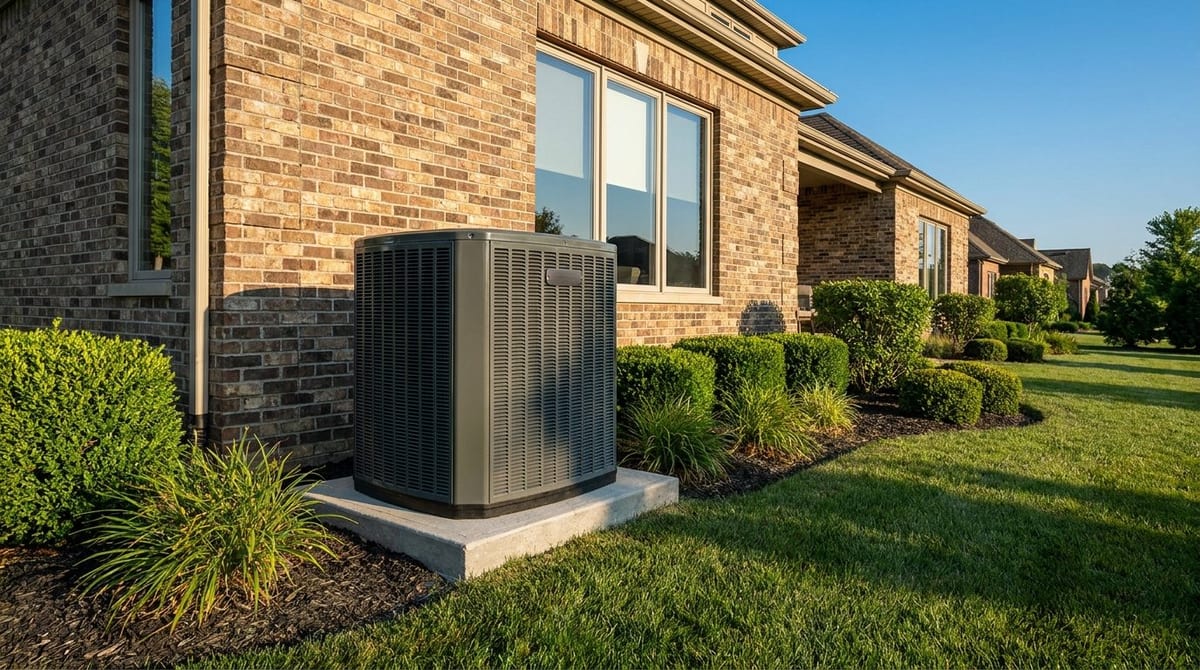
What size AC do I need for my house?
The rule of thumb, why "bigger is better" is a myth, and how sizing is really done.
By The T.A.P. Team · June 2024 · 6 min read
As a rough starting point, homes need about one ton of air conditioning per 400 to 600 square feet — so a 2,000 sq ft house lands somewhere around 3.5 to 5 tons. But that's only a ballpark: the right way to size a system is a Manual J load calculation that accounts for your insulation, windows, ceiling height, sun exposure and more. In Texas especially, an oversized system is a real problem, not a safe bet.
- ~1 ton of cooling per 400–600 sq ft
- 1 ton = 12,000 BTU
- A 2,000 sq ft home ≈ 3.5–5 tons
- Only a Manual J load calc is accurate
- Bigger is NOT better — oversizing causes problems
The rule of thumb (and its limits)
Square footage gives a rough tonnage — roughly one ton per 400–600 sq ft, where a ton equals 12,000 BTU of cooling. It's useful for a gut check, but two same-size homes can need very different systems depending on insulation, windows, orientation and ceiling height. Never buy a system on square footage alone.
Why bigger is not better
An oversized AC cools the air fast but shuts off before it removes humidity, so the house feels cold and clammy and the system short-cycles — turning on and off constantly, which wears out parts and wastes energy. In humid Texas summers, right-sized equipment that runs longer, steadier cycles is what actually keeps you comfortable.
Why undersized fails too
Too small, and the system runs nonstop and still can't keep up on the hottest days — high bills and an early death from constant running. The goal is a system matched to the home's actual load, not the biggest one that fits the budget or the smallest that seems to cool.
How sizing is really done: Manual J
A proper load calculation (the industry's "Manual J") accounts for square footage, insulation, window type and area, air sealing, ceiling height, sun exposure and local climate. It's the only reliable way to size a system, and it's part of a professional AC installation. If a contractor sizes your system off square footage alone, get a second opinion.
| Home size | Rough tonnage (starting point) |
|---|---|
| 1,000 sq ft | 1.5–2.5 tons |
| 1,500 sq ft | 2.5–3.5 tons |
| 2,000 sq ft | 3.5–5 tons |
| 2,500 sq ft | 4–6 tons |
| Exact size | Manual J load calc |
The single most important thing in a new AC isn't the brand or the SEER rating — it's correct sizing, and the only way to get it right is a Manual J load calculation. Oversizing to "be safe" causes humidity and short-cycling; undersizing causes constant running. A proper calc is how a system runs efficiently and lasts.
Sizing for the Texas climate
Our intense sun and long cooling season mean window area, orientation and insulation weigh heavily in a DFW load calc — a west-facing wall of glass changes the answer. When we size systems across Plano, McKinney, and Richardson, the calculation — not the square footage — sets the tonnage.
The short version
- Start with ~1 ton per 400–600 sq ft (1 ton = 12,000 BTU).
- A ~2,000 sq ft home usually needs about 3.5–5 tons.
- Only a Manual J load calc gives the accurate size.
- Bigger is not better — oversizing causes humidity and short-cycling.
- Undersizing means constant running and an early failure.
- Insist a contractor do a load calc, not size off square footage alone.
AC sizing — frequently asked questions
Getting a new system?
Get a proper load calculation and right-sized quote. Serving Dallas–Fort Worth & North Texas for over 25 years.