
How to protect your HVAC in a Texas freeze
A pre-freeze checklist for North Texas homeowners — after 2021, worth doing.
By The T.A.P. Team · November 2024 · 6 min read
Texas winters are mild until they're not — and after 2021, North Texans know a hard freeze can arrive fast. Protecting your HVAC is mostly simple prep: a fresh filter for good airflow, a steady thermostat setting, clear vents, and knowing how your system behaves in the cold. A little readiness keeps the heat on when a freeze hits and the grid is strained.
- Replace the filter for full airflow
- Keep the heat at a steady temperature
- Don't block vents; open interior doors
- Know your heat pump's backup heat
- Never pour hot water on a frozen outdoor unit
Keep airflow and heat steady
Put in a fresh filter so the furnace or heat pump isn't fighting restricted airflow when it's working hardest. During a freeze, hold a steady temperature rather than big setbacks — recovering from a deep setback strains the system (and a heat pump will lean on expensive backup heat). Open interior doors and keep supply vents clear so heat moves through the house.
Know your heat pump in the cold
A heat pump heats efficiently above freezing but loses capacity as it drops, switching to electric backup "heat strips" (or "emergency heat") on the coldest days. That's normal — but it's why bills spike in a freeze. Know where your emergency-heat setting is, and don't panic if the outdoor unit frosts and briefly reverses to defrost. See heat pump vs AC.
Protect the outdoor unit
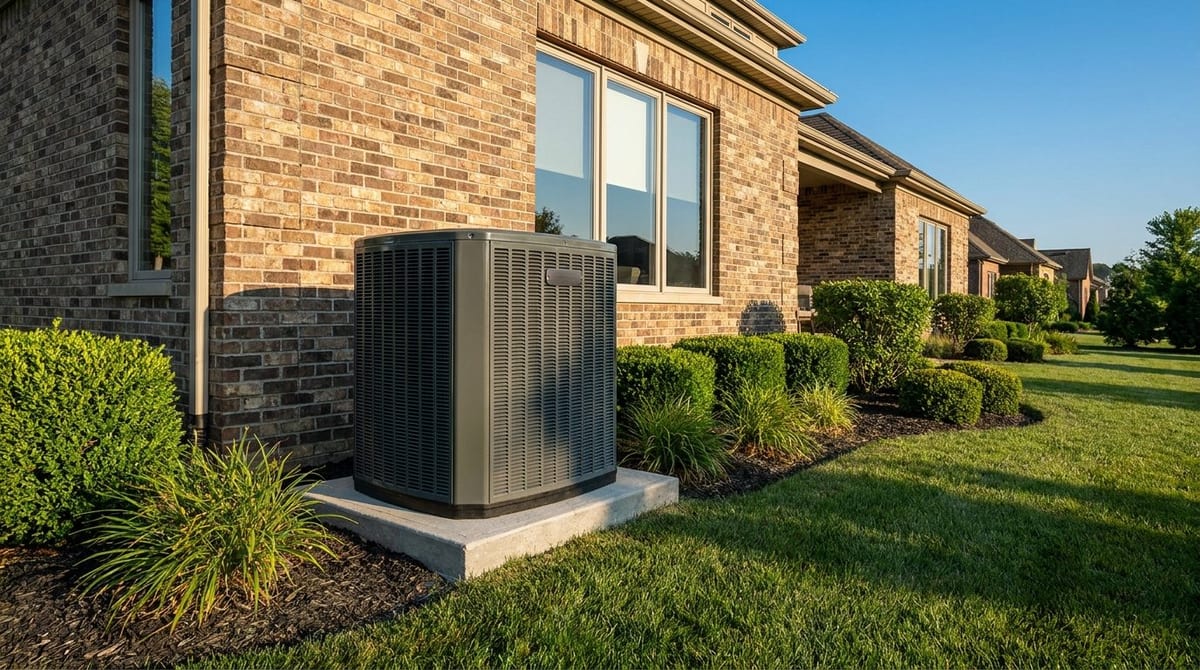
Clear leaves and debris from around the condenser or heat pump, and don't cover a heat pump that's running (it needs airflow). If it ices over heavily, let it defrost — never pour hot water or chip at it, which can crack the coil. For the cooling-season version of icing, see why is my AC freezing up.
Don't forget the pipes
Frozen pipes are the other freeze disaster. Drip faucets, open cabinet doors under sinks on exterior walls, disconnect garden hoses, and know where your main shutoff is. HVAC and plumbing both suffer in a freeze, and a burst pipe does far more damage than a cold night.
| Before the freeze | Why |
|---|---|
| Fresh filter | Full airflow when it matters |
| Steady thermostat | Avoids straining recovery / heat strips |
| Clear the outdoor unit | Airflow + no ice damage |
| Drip faucets | Prevents frozen pipes |
| Know emergency heat | Backup when a heat pump can't keep up |
The best freeze protection happens in the fall: a heating tune-up that confirms the furnace or heat pump, backup heat, and safeties all work before the first hard cold. Prep the day before helps, but a system checked in November is the one that keeps running in January. See how often to service your HVAC.
After the 2021 freeze, North Texas prepares
The 2021 winter storm taught DFW that a freeze can overwhelm an unprepared home and grid. Homeowners across Plano, McKinney, and Frisco now do more to get ready — and a fall heating check from our HVAC team is the foundation of it.
The short version
- Put in a fresh filter so the heater isn't fighting restricted airflow.
- Hold a steady thermostat setting rather than deep setbacks during a freeze.
- Know your heat pump's backup "emergency heat" — and expect higher bills in the cold.
- Keep the outdoor unit clear; never pour hot water on a frozen unit.
- Drip faucets and open under-sink cabinets to prevent frozen pipes.
- A fall heating tune-up is the real freeze insurance.
Texas freeze HVAC prep — frequently asked questions

Ready for the next freeze?
Get a fall heating tune-up before the cold hits. Serving Dallas–Fort Worth & North Texas for over 25 years.