
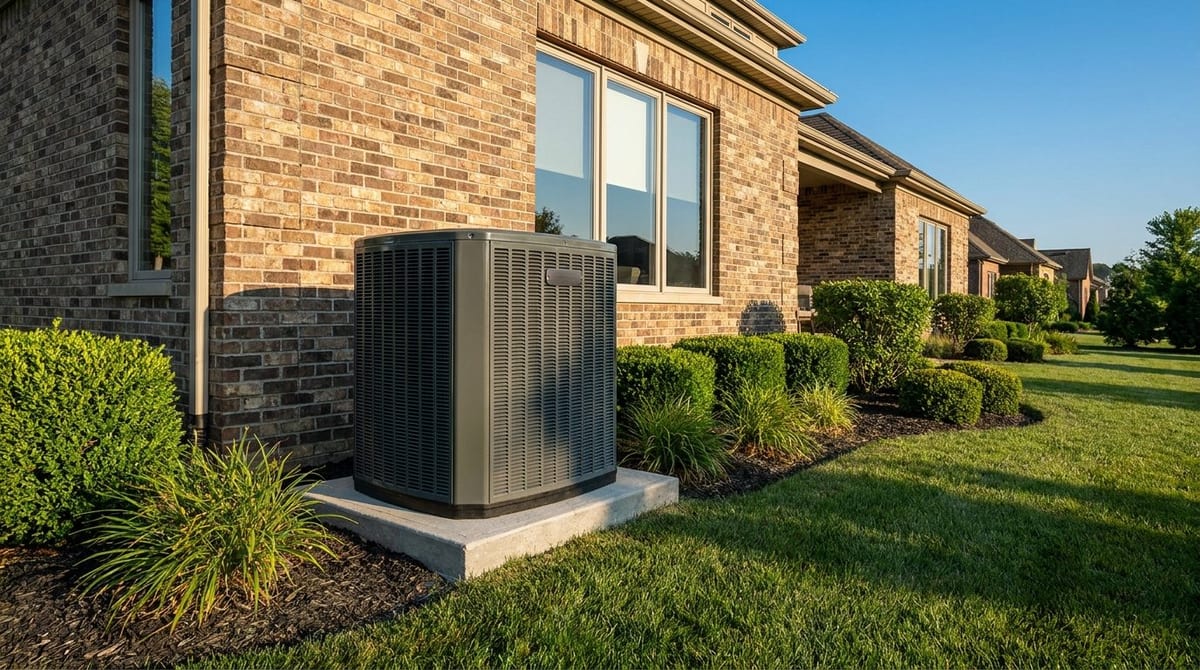
How long does an AC unit last in Texas?
The honest answer, why Texas is harder on AC, and when to replace vs repair.
By The T.A.P. Team · August 2024 · 6 min read
A central air conditioner lasts about 12 to 15 years in Texas — a few years less than the national average, because our long, punishing cooling season runs systems harder than almost anywhere in the country. With good maintenance a quality system can reach the high end of that range; neglected or undersized units often fail sooner. Once a unit passes 12 years and needs a major repair, replacement usually makes more financial sense.
- Typical Texas lifespan: 12–15 years
- U.S. average: 15–20 years — our heat shortens it
- Heat pumps: ~10–15 years (they run year-round)
- Biggest factor in lifespan: regular maintenance
- Replace when: 12+ years old and facing a major repair
Why Texas is harder on air conditioners
A central AC in Dallas–Fort Worth runs far more hours per year than one in a mild climate — our cooling season stretches from spring into October, often at 100°-plus. All that runtime wears out compressors, motors, and capacitors faster, which is why Texas systems typically last 12–15 years instead of the national 15–20. The heat isn't just uncomfortable; it's the single biggest reason our equipment ages early.
What shortens an AC's life
Skipped maintenance is the top killer — dirty coils and clogged filters make the system work harder and run hotter. Low refrigerant from an unrepaired leak, a system that was oversized or undersized at install, and poor airflow from bad ductwork all take years off. Neglect can cut a 15-year system to 8–10.
What makes one last longer
The opposite habits add years: change filters on schedule, get an annual tune-up that cleans the coil and checks the charge, keep the outdoor unit clear, and fix small problems before they cascade. A right-sized, well-maintained system reaching the top of that 12–15 range is entirely realistic.
Signs yours is near the end
Watch for rising energy bills, repairs every season, uneven cooling, and a unit that can't keep up on the hottest days. Systems still using R-22 refrigerant (now phased out) get very expensive to repair. When two or more of these stack up on a 12-plus-year-old unit, replacement usually wins.
Repair or replace? The quick math
A common rule: if the repair costs more than about a third of a new system — and the unit is past 10–12 years — replace it. Newer high-SEER systems also cut the cooling bills that Texas summers inflate. See our AC replacement cost breakdown and when to replace an AC in Texas.
| System type | Typical Texas lifespan |
|---|---|
| Central air conditioner | 12–15 years |
| Heat pump | 10–15 years (runs year-round) |
| Gas furnace | 15–20 years |
| Ductless mini-split | 15–20 years |
| Ductwork | 15–25 years |
The two things that most determine how long a system lasts are correct sizing at installation and consistent maintenance after it. An oversized unit short-cycles and wears early; a neglected one bakes its own components. Both are avoidable — and both are why a professional install and a yearly tune-up pay for themselves.
Planning ahead in DFW's cooling season
Because our summers are so long, most North Texas homeowners get 12–15 years before replacement — so if yours went in around the early 2010s, it's worth planning now rather than during a July breakdown. We help homeowners across Plano, Garland, and Richardson weigh one more repair against a more efficient replacement.
The short version
- A central AC lasts about 12–15 years in Texas — a bit less than the national average.
- Our long, hot cooling season is the main reason systems age faster here.
- Heat pumps last ~10–15 years because they run in winter too.
- Regular maintenance is the biggest factor you actually control.
- Watch for rising bills, yearly repairs, and R-22 refrigerant as end-of-life signs.
- If a major repair hits a 12+ year-old unit, replacement usually makes more sense.
AC lifespan in Texas — frequently asked questions

Wondering if it's time to replace?
Get a free, honest assessment of your system's life and options. Serving Dallas–Fort Worth & North Texas for over 25 years.