
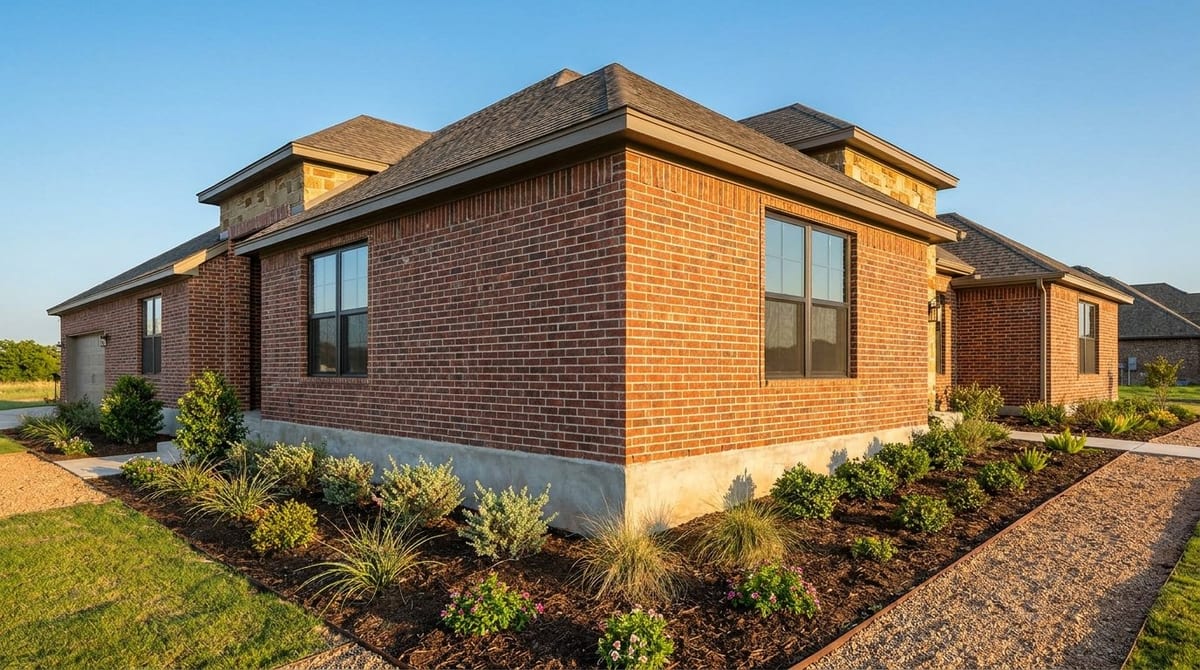
Does drainage affect my foundation?
Yes — water against the house is a leading cause of foundation movement.
By The T.A.P. Team · November 2024 · 5 min read
Yes — drainage has a direct and major effect on your foundation. Water that pools against the house saturates the clay soil unevenly, and uneven moisture is exactly what makes expansive clay move and crack a foundation. Getting water away from the house — through proper grading, working gutters, and extended downspouts — is one of the cheapest, most effective ways to protect a North Texas foundation. Here's how drainage and your foundation are connected.
- Water pooling at the house = uneven soil moisture
- Uneven moisture moves the clay = foundation movement
- Grade should slope away from the house
- Extend downspouts several feet from the base
- Good drainage is cheap foundation insurance
How drainage moves a foundation
The link is moisture. When water collects against one side of the house, it keeps that soil swollen while another side dries out — and that difference, called differential movement, twists the foundation and cracks it. It's the same expansive-clay mechanism behind our foundation problems, just triggered by where the water goes.
Grading: slope away from the house
The most fundamental drainage fix is grade — the ground should slope away from the foundation, commonly about six inches of fall over the first ten feet. If water flows toward or pools beside the house, correcting the grade so it drains away is a high-priority protection, along with filling low spots that trap water near the foundation.
Gutters and downspouts
A surprising share of the water hitting your foundation is simply roof runoff dumped at the base. Keep gutters clean so they carry water to the downspouts, and extend downspouts several feet away from the house (or into an underground drain). It's cheap, easy, and often the single biggest drainage improvement you can make.
When you need more
For persistent soggy areas or water flowing in from higher ground, a French drain or swale carries it away — see fixing yard drainage. Remember drainage is only half the equation: it handles the wet season, while watering handles the dry. Together they keep soil moisture consistent. See our foundation services.
| Issue | Fix |
|---|---|
| Water pools at the house | Regrade to slope away |
| Downspouts dump at the base | Extend them several feet |
| Clogged gutters overflow | Clean the gutters |
| Soggy area / uphill water | French drain or swale |
| Low spots near the foundation | Fill them |
You can DIY
- Extend downspouts from the foundation
- Clean gutters regularly
- Fix grade to slope away
- Fill low spots near the house
- Watch where water flows in a storm
Call a pro
- Installing French drains or swales
- Major regrading
- A foundation evaluation
- Drainage threatening the foundation
- Any needed repair
Before anything expensive, get the water away from the house: slope the grade away from the foundation and extend the downspouts several feet out. These low-cost fixes address one of the leading causes of foundation movement in North Texas — water pooling against the slab. Drainage handles the wet season; pair it with drought watering for the dry, and you've protected the foundation from both directions.
Drainage and DFW foundations
Because our clay swells with moisture, controlling where water goes directly protects foundations across Plano, Garland, and McKinney. We fix drainage and evaluate foundations. See our foundation team.
The short version
- Yes — drainage has a direct, major effect on your foundation.
- Water pooling against the house saturates the clay unevenly, which moves the foundation.
- The ground should slope away from the house — about 6 inches over 10 feet.
- Extend downspouts several feet from the foundation and keep gutters clean.
- French drains and swales handle persistent soggy areas and uphill water.
- Drainage handles the wet season; pair it with drought watering for consistent moisture.
Drainage and your foundation — frequently asked questions

Water pooling by the house?
Get drainage fixed to protect your foundation. Serving Dallas–Fort Worth & North Texas for over 25 years.