
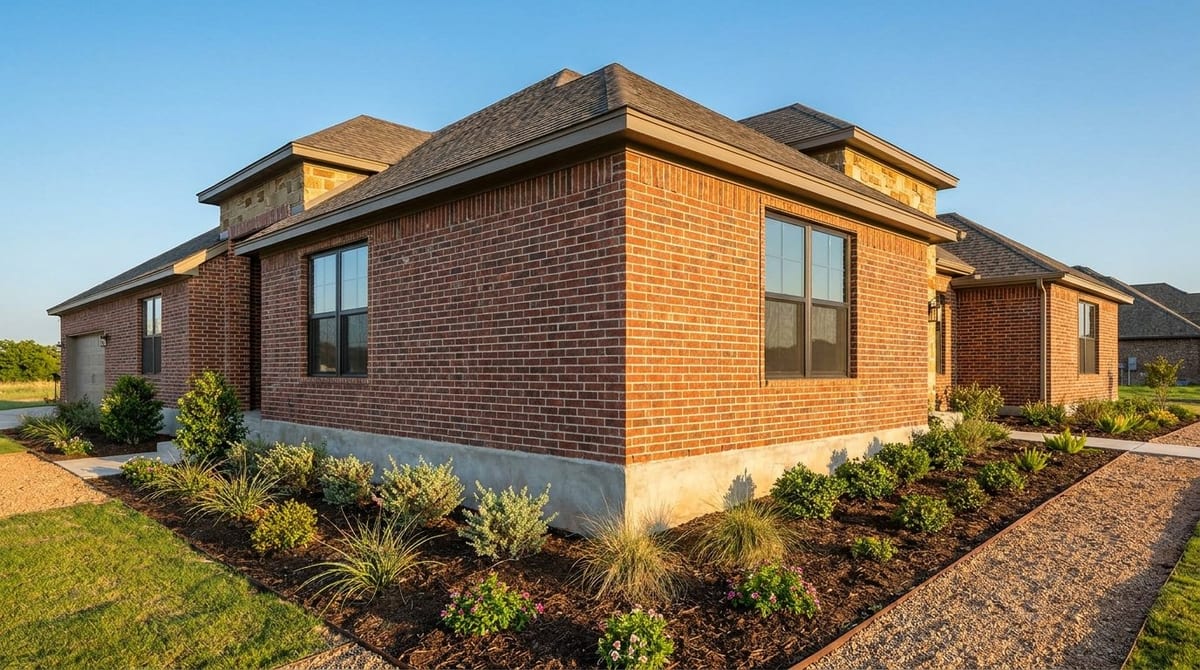
What causes foundation problems in Texas?
Expansive clay soil that swells and shrinks — plus drought, drainage, trees, and leaks.
By The T.A.P. Team · August 2024 · 6 min read
Foundation problems in North Texas almost always trace back to one thing: expansive clay soil. Our clay swells when it's wet and shrinks when it's dry, so the ground under your foundation is constantly moving — lifting and dropping as moisture changes with our wet springs and bone-dry summers. Drought, poor drainage, big trees pulling moisture, and plumbing leaks all make it worse by changing how wet the soil is. Here's why our soil is so hard on foundations.
- Expansive clay soil — swells wet, shrinks dry
- Drought dries and shrinks the soil (settling)
- Poor drainage keeps soil unevenly wet
- Large tree roots pull moisture from one side
- Plumbing/slab leaks saturate the soil
Expansive clay: the root cause
North Texas sits on expansive clay — soil whose minerals absorb water and swell, then shrink as they dry. That means the ground under your slab literally rises and falls by inches as moisture changes. Because different parts of the soil dry and wet at different rates, the foundation moves unevenly, and concrete cracks where it's pulled and pushed. Nearly every local foundation issue starts here.
Drought and moisture swings
Our climate drives the clay to extremes: a hot Texas drought dries and shrinks the soil, so the foundation settles and pulls down; then heavy rain swells it back up, heaving the foundation. That repeated wet-dry cycle is what stresses and cracks foundations. The flip side — keeping moisture steady — is exactly why prevention works.
Drainage and trees
Anything that makes the soil wetter in one place than another causes "differential" movement. Poor drainage that keeps water pooled against one side of the house, and large trees whose roots pull huge amounts of moisture from the soil on their side, both dry or wet the ground unevenly — twisting the foundation. Good drainage and smart tree placement matter.
Plumbing and slab leaks
A plumbing or slab leak under the foundation saturates the soil in one spot, causing localized swelling and movement — and it's easy to miss. It's the same expansive clay behind both slab leaks and foundation movement. Because the cause is moisture, the solutions are about controlling moisture: drainage, watering, and fixing leaks.
| Cause | What it does |
|---|---|
| Expansive clay | Swells wet, shrinks dry — moves the slab |
| Drought | Dries soil → foundation settles |
| Heavy rain after drought | Swells soil → foundation heaves |
| Poor drainage | Uneven moisture → differential movement |
| Large trees | Roots dry one side |
| Plumbing/slab leaks | Saturate soil in one spot |
The single insight that explains North Texas foundations is that expansive clay moves with moisture — so the enemy is big swings between wet and dry, and the defense is keeping the soil around your foundation evenly moist. Drainage that sheds water in the wet, watering that holds moisture in the drought, and fixing leaks all serve that one goal. Understand the cause, and prevention becomes straightforward.
Why DFW is foundation country
The Dallas–Fort Worth area is famous for foundation issues precisely because of its expansive clay and dramatic wet-dry cycles, affecting homes across Richardson, Garland, and Mesquite. We evaluate and repair foundations built for this soil. See our foundation team.
The short version
- North Texas foundation problems trace back to expansive clay soil.
- Clay swells when wet and shrinks when dry, moving the ground under the slab by inches.
- Drought shrinks the soil (settling); rain after drought swells it (heaving).
- Poor drainage and big trees create uneven moisture and differential movement.
- Plumbing and slab leaks saturate the soil in one spot and cause movement.
- Because the cause is moisture, keeping soil moisture consistent is the defense.
What causes foundation problems — frequently asked questions
Worried about your foundation?
Get a free evaluation from a team that knows Texas clay. Serving Dallas–Fort Worth & North Texas for over 25 years.