
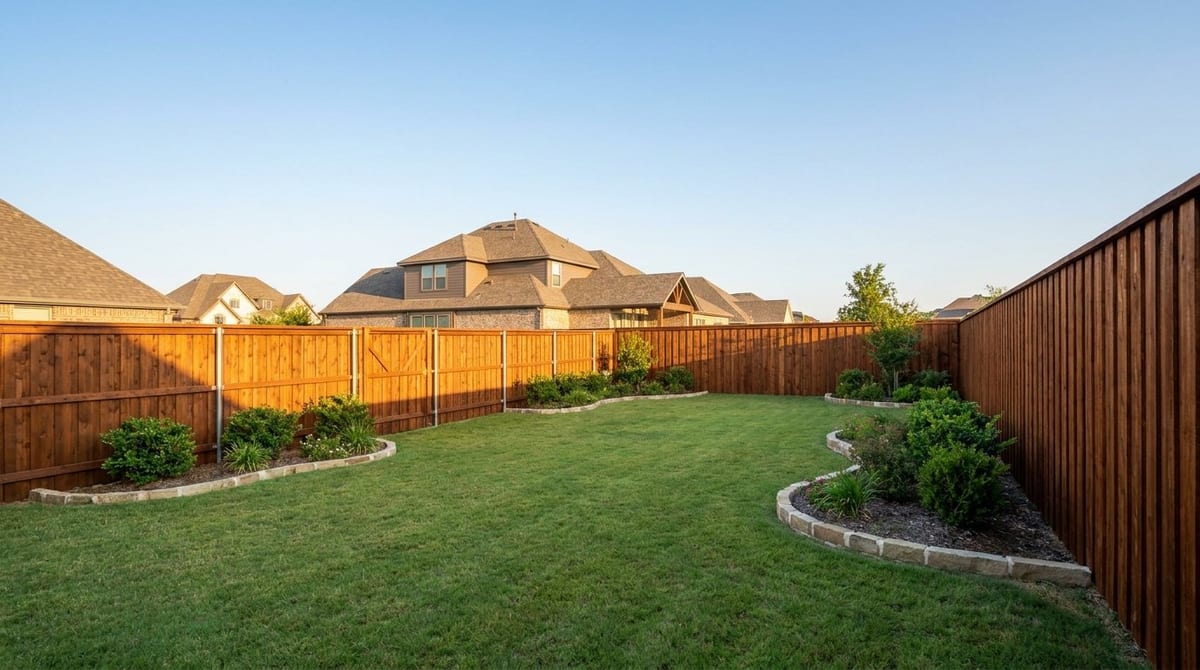
What affects the cost of a fence?
Material, height, length, style, terrain, and gates — the real cost drivers.
By The T.A.P. Team · January 2024 · 6 min read
Fence pricing isn't one number — it's driven by material, height, how many linear feet you need, the style, your terrain, gates, and whether an old fence has to come out. Cedar costs more than pine; a 6-foot board-on-board costs more than a 4-foot picket; a long, sloped, gated run costs more than a short flat one. Understanding the drivers helps you compare quotes and control the price. Here's what moves the number.
- Material (cedar vs pine vs metal vs vinyl)
- Height (taller = more material)
- Length in linear feet
- Style (board-on-board vs picket)
- Gates, terrain, and old-fence removal
Material and height
Material is the biggest lever: treated pine is cheapest, cedar costs more (and lasts longer), and ornamental metal or vinyl cost more still — see best fence wood and vinyl. Height matters too: a 6-foot fence uses more wood (and taller posts) than a 4-foot one, and an 8-foot fence more again.
Length, style, and gates
Fences are usually priced by the linear foot, so total length is a direct driver. Style adds up: a board-on-board fence uses more pickets than a standard one, and decorative caps or trim cost extra. Gates are pricier per foot than fence — especially wide drive gates and anything automated — so the number and size of gates moves the total.
Terrain, soil, and access
A flat, open yard is cheapest to fence. Slopes, rocky or root-filled ground, and hard-to-reach areas (tight side yards, no gate access for equipment) all add labor. Our expansive clay can complicate post-setting. And if there's an existing fence, removal and disposal is a line item — a repair might be cheaper than a full replacement.
Getting an accurate estimate
Because so many factors interact, the only real price is a measured, written estimate. A good contractor walks the property, measures the linear feet, notes the terrain and gates, and specs the material and height — then gives you a clear number. Beware quotes given sight-unseen. See our fence cost page and get a free estimate.
| Cost driver | Effect on price |
|---|---|
| Material | Pine < cedar < metal/vinyl |
| Height | Taller = more material |
| Length (linear ft) | Direct driver |
| Style | Board-on-board > picket |
| Gates | Priced higher than fence |
| Terrain / removal | Slopes, rock, old-fence add cost |
With this many variables, any price quoted without seeing your yard is a guess. Best practice is a written estimate from a contractor who measures the run, notes the terrain and gates, and specs the exact material and height. That's how you compare quotes fairly and avoid surprises — and it's a sign the contractor is being straight with you.
What drives fence cost in DFW
Across North Texas, cedar, 6-foot heights, and board-on-board privacy are popular choices that sit at the higher end, while treated pine and standard pickets keep costs down. We give measured, written estimates across Plano, Frisco, and Southlake. See our fence installation team and cost page.
The short version
- Fence cost is driven by material, height, length, style, terrain, and gates.
- Material is the biggest lever: pine < cedar < metal or vinyl.
- Fences are priced by the linear foot, so total length matters a lot.
- Board-on-board uses more wood than a standard picket fence, so it costs more.
- Gates — especially wide or automated ones — cost more per foot than fence.
- Slopes, rocky soil, and removing an old fence all add labor and cost.
Fence cost factors — frequently asked questions
Want an accurate fence price?
Get a free, measured, written estimate. Serving Dallas–Fort Worth & North Texas for over 25 years.