
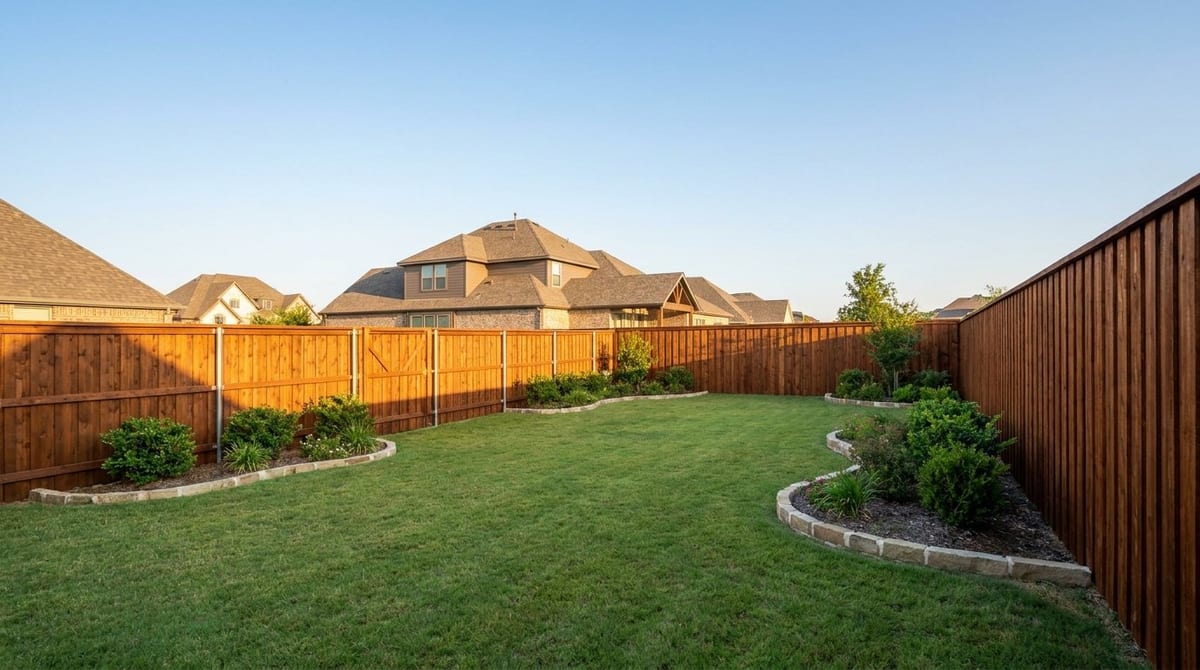
Horizontal vs. vertical fence
Modern looks vs. traditional durability — how orientation changes a fence.
By The T.A.P. Team · April 2024 · 5 min read
Horizontal fences — pickets running side to side — have a clean, modern look that's popular on contemporary homes, while vertical fences (pickets running up and down) are the traditional style you see everywhere. Beyond looks, orientation affects cost, how the fence sheds water, and how it handles a sloped yard. Horizontal usually costs more and needs careful building to avoid sagging; vertical is cheaper and drains better. Here's the trade-off.
- Horizontal: modern look, popular on new builds
- Vertical: traditional, sheds water better
- Horizontal costs more (better wood, more structure)
- Horizontal can sag without proper support
- Vertical is the budget, low-fuss choice
Looks and style
Horizontal fences read modern and upscale — they suit contemporary and mid-century homes and make a yard feel wider. Vertical fences are the classic, familiar look that fits almost any house. This is often the deciding factor: many people choose horizontal purely for the aesthetic.
Cost and structure
Horizontal fences typically cost more. The boards span between posts with less support, so they need higher-grade, straighter lumber and often closer post spacing or a supporting frame to stay flat. Vertical pickets are backed by horizontal rails, which is simpler and cheaper to build.
Water, warping, and sagging
Vertical boards shed rain down their length; horizontal boards can hold water along their top edges, which in our climate can mean faster warping if lower-grade wood is used. Horizontal runs can also sag over a long span without proper support. Good materials and construction solve both, but they're why horizontal costs more.
Slopes and which to choose
On a sloped yard, vertical fences "step" or rack cleanly with the grade; horizontal fences either follow the slope (tricky) or need stepped sections. Choose horizontal for a modern look if you'll invest in the materials and building it right; choose vertical for lower cost, easy slope handling, and durability. Either way, wood choice matters.
| Horizontal | Vertical | |
|---|---|---|
| Look | Modern | Traditional |
| Cost | Higher | Lower |
| Water shedding | Holds on edges | Sheds well |
| Sag risk | Higher (long spans) | Low |
| Slopes | Trickier | Steps/racks easily |
Horizontal fences live or die by materials and construction — straight, quality boards and enough support to prevent sagging and warping. It's the wrong place to save money on lower-grade lumber. If the budget won't stretch to build horizontal properly, a vertical fence delivers better durability for less. Match the style to what you'll actually invest.
Modern fences in North Texas
Horizontal fences have gotten popular on newer and renovated DFW homes for their clean look, and we build them right — quality lumber and proper support — across Southlake, Flower Mound, and Frisco. Vertical remains the durable, budget-friendly standard. See our fence team.
The short version
- Horizontal fences look modern; vertical fences are the traditional standard.
- Horizontal usually costs more — it needs better wood and more support.
- Vertical boards shed water better; horizontal edges can hold water and warp.
- Horizontal runs can sag over long spans without proper structure.
- Vertical fences handle sloped yards more easily (they step with the grade).
- Choose horizontal for looks if you'll build it right; vertical for cost and durability.
Horizontal vs vertical fence — frequently asked questions
Horizontal or vertical?
Get your style built right and priced. Serving Dallas–Fort Worth & North Texas for over 25 years.