
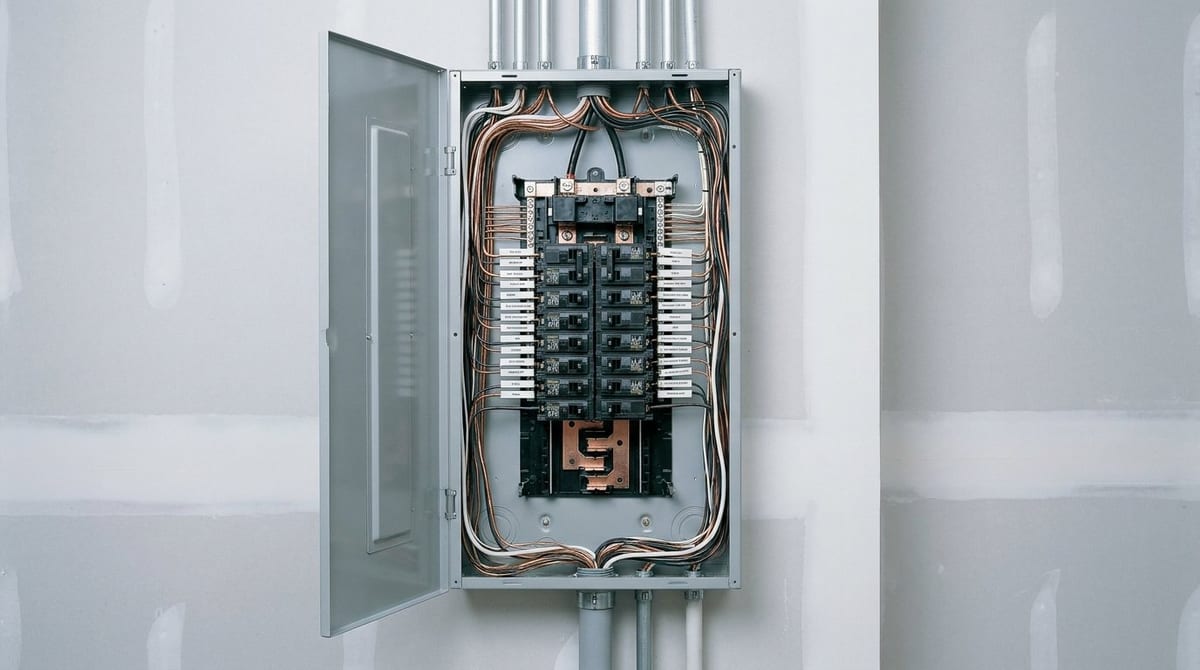
Is aluminum wiring dangerous?
A known fire risk in ~1965–1973 homes — the signs and the proper fix.
By The T.A.P. Team · September 2024 · 6 min read
Aluminum branch wiring — used in many homes built between about 1965 and 1973 — is considered a fire hazard, not because the wire itself is bad, but because aluminum expands, contracts, and corrodes at its connections, loosening over time and creating heat at outlets, switches, and splices. It's a real safety issue that needs proper remediation, not a quick fix. Here's how to know if you have it, the warning signs, and the correct repairs.
- Common in homes built ~1965–1973
- The danger is at connections, not the wire itself
- Signs: warm outlets/switches, flickering, burning smell
- Insurers may require remediation or charge more
- Proper fix: COPALUM crimps or AlumiConn connectors
Why aluminum wiring fails
Aluminum expands and contracts more than copper as it heats and cools, and it oxidizes into a resistant film. Over years, that loosens the screws and splices where the wire connects to outlets, switches, and fixtures. Loose, oxidized connections create resistance, resistance creates heat, and heat at a connection is how fires start — which is why the hazard is concentrated at the terminations, not along the wire.
Do you have it?
Aluminum branch wiring is most common in homes built in the late 1960s to early 1970s. You (or an electrician) can often spot it by markings on the cable jacket in the panel — the words "ALUMINUM" or "AL." Note that large appliance and service feeders are commonly aluminum and are fine; the concern is aluminum on the smaller branch circuits feeding outlets and switches.
Warning signs
Watch for warm or discolored outlet and switch cover plates, flickering lights, arcing or buzzing, a burning-plastic smell, and outlets that stop working. Any of these on a home with aluminum branch wiring should be treated seriously — see warm or sparking outlets. Don't wait for a problem; if you have aluminum wiring, have it evaluated.
The proper fixes
The recognized repairs are not just replacing outlets. The accepted remediations are COPALUM crimp connectors or AlumiConn connectors, which properly join a short copper "pigtail" to the aluminum at every connection, or a full rewire to copper. Avoid unproven shortcuts. This is specialized, safety-critical work for a qualified electrician.
| Approach | Verdict |
|---|---|
| Ignore it | Unsafe — fire risk grows |
| Just replace outlets | Not a recognized fix |
| COPALUM crimp pigtails | Accepted remediation |
| AlumiConn connectors | Accepted remediation |
| Full rewire to copper | Permanent solution |
Aluminum branch wiring is one of the few things that genuinely warrants proactive attention rather than waiting for a symptom. The right response is a recognized remediation — COPALUM or AlumiConn connectors at every connection, or a rewire — performed by a qualified electrician. Painting over it, replacing a few outlets, or hoping for the best leaves the fire risk in place. Many insurers now ask about it for a reason.
Aluminum wiring in North Texas homes
DFW has a stock of late-1960s to early-1970s homes built with aluminum branch wiring, so it's a genuine local safety topic across Richardson, Garland, and Plano. We evaluate wiring and perform recognized remediation. See our electrical team.
The short version
- Aluminum branch wiring (~1965–73 homes) is a known fire risk at its connections.
- The wire is fine; the danger is loosening, corroding connections that overheat.
- Signs: warm outlets/switches, flickering, buzzing, or a burning smell.
- Check for "AL"/"ALUMINUM" markings on the cable in the panel.
- The proper fixes are COPALUM/AlumiConn connectors or a full rewire.
- Just replacing outlets is not a recognized fix — and never ignore it.
Aluminum wiring — frequently asked questions
Have aluminum wiring?
Get it evaluated and properly remediated. Serving Dallas–Fort Worth & North Texas for over 25 years.