
Re-Roof vs. Full Roof Replacement
When you can roof over — and when you need a tear-off.
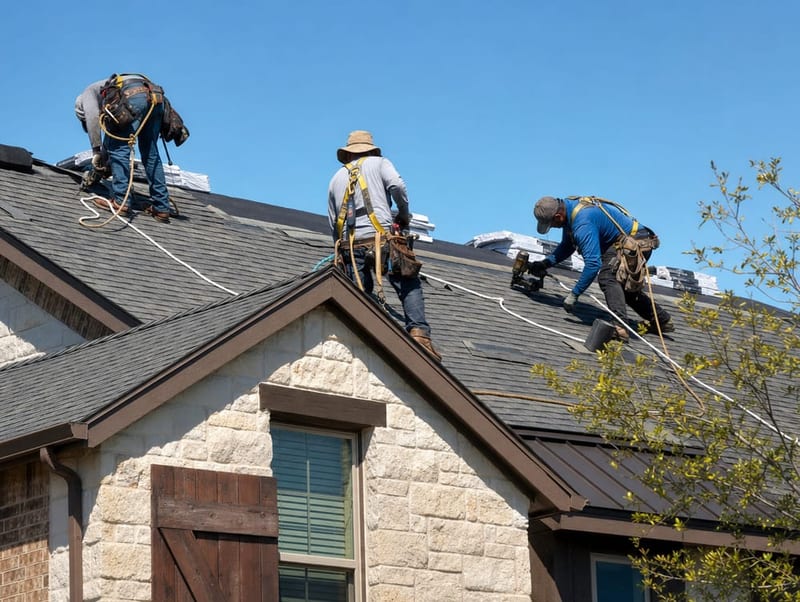
A re-roof (roofing over your existing shingles) is cheaper and faster, but it's only an option if you have a single existing layer, the decking is sound, and there's no trapped moisture — and in North Texas, insurance adjusters and best practice usually call for a full tear-off after hail damage. A full replacement removes everything down to the deck, letting us inspect and repair the decking and install fresh underlayment. Here's how to decide.
Re-roof vs. full replacement
| Factor | Re-roof (overlay) / Full replacement |
|---|---|
| Cost | Re-roof lower · Replacement higher |
| What happens | New layer over old · Tear-off to the deck |
| Deck inspection | No — deck stays hidden · Yes — deck inspected & repaired |
| Allowed when | One existing layer, sound deck · Always |
| Insurance/hail | Usually not accepted · Standard for claims |
| Lifespan | Often shorter · Full expected life |
When a re-roof is allowed
Building codes generally allow only two total roof layers, so a re-roof requires that you currently have just one, that the decking underneath is sound and dry, and that the existing shingles lie flat. It saves money by skipping tear-off and disposal.
Why tear-off usually wins in DFW
After hail, insurers typically pay for — and require — a full tear-off, so the re-roof savings don't apply. A tear-off also lets us find and fix damaged decking and install new underlayment, and it's required for most manufacturer warranties. See typical replacement cost, the signs you need a new roof, and how hail claims work.
Re-roof vs replacement — frequently asked questions

Re-roof or replace? Find out free
Get a free inspection and honest recommendation for your roof. Serving Dallas–Fort Worth & North Texas for over 25 years.