
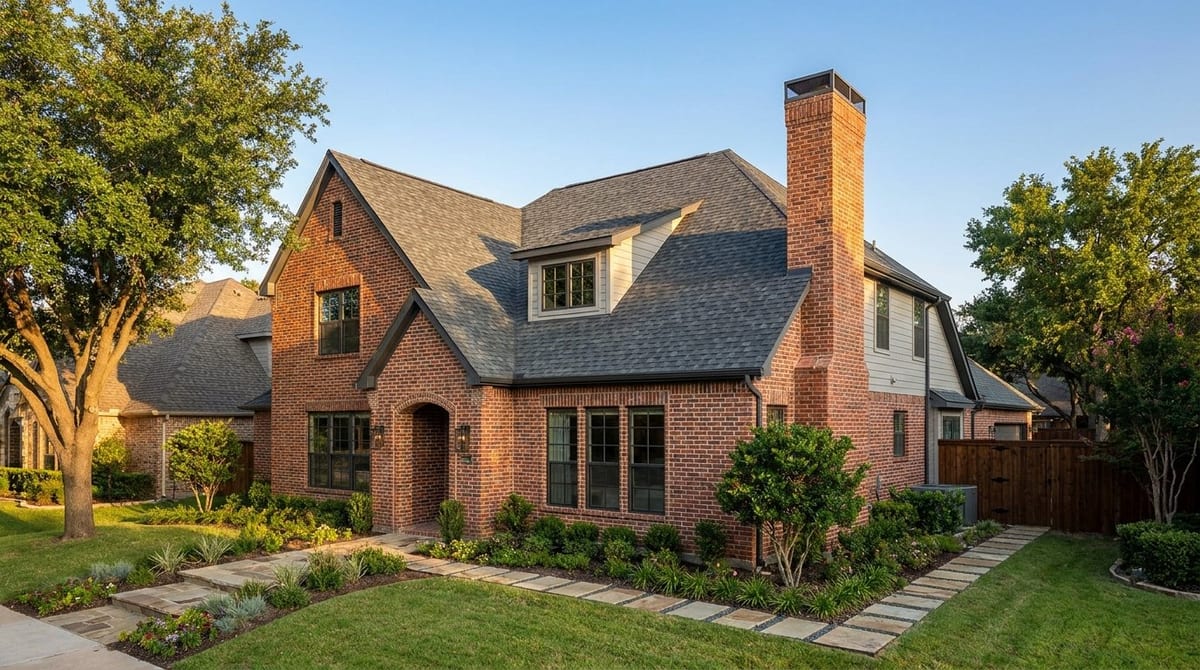
What are the black streaks on my roof?
It is algae, not dirt — mostly cosmetic, but worth handling.
By The T.A.P. Team · July 2024 · 5 min read
Those dark streaks running down your roof aren't dirt or soot — they're a blue-green algae called Gloeocapsa magma. It feeds on the limestone filler in asphalt shingles, spreads through airborne spores, and shows up as black stains on the shaded, north-facing slopes first. It's mostly a cosmetic problem, but because it holds moisture against the shingles it can shorten roof life if left for years. Here's what the streaks are, whether they're hurting your roof, and how to clean and prevent them.
- The streaks are algae, not dirt or mold
- It feeds on limestone filler in asphalt shingles
- Worst on shaded, north-facing slopes
- Mostly cosmetic — but holds moisture over time
- Never pressure-wash a roof to remove it
What the streaks really are
The stains are colonies of Gloeocapsa magma, a hardy algae that travels by spore and takes hold on roofs, feeding on the crushed limestone that manufacturers add to asphalt shingles as filler. Its dark protective coating is what you see as black streaks. It thrives where roofs stay damp and shaded, which is why the north-facing and tree-shaded slopes usually streak first while the sunny side stays cleaner.
Is it actually damaging my roof?
For the most part it's a curb-appeal problem, not a structural one — a streaked roof isn't about to leak because of the algae. But it isn't harmless if ignored for years: the algae mat holds moisture against the shingles and slightly raises surface temperature, which over a long time can accelerate granule loss and aging. So it's worth cleaning, both to protect resale value and to avoid giving the roof one more thing working against it.
How to clean it safely
The critical rule: never pressure-wash a shingle roof — the force strips the protective granules and destroys the shingle. Algae is removed with a gentle "soft wash," a low-pressure application of a cleaning solution (typically a diluted sodium-hypochlorite or specialized roof cleaner) that kills the algae, followed by a light rinse. Because it involves chemicals, a slick roof, and protecting your plants below, roof cleaning is usually best left to a pro.
Keeping the streaks from coming back
Trimming back branches so the roof dries faster and keeping it free of debris both slow regrowth. The lasting fix, though, is at replacement: modern algae-resistant shingles embed copper granules that inhibit growth, and installing zinc or copper strips near the ridge lets rain wash a trace of metal down the slope to keep algae from taking hold. Pair that with routine roof maintenance.
| Question | Answer |
|---|---|
| What is it? | Gloeocapsa magma algae |
| Is it dirt or mold? | Neither — it is algae |
| Does it cause leaks? | No — mostly cosmetic |
| Can I pressure-wash it? | No — it destroys shingles |
| How do I prevent it? | Algae-resistant shingles, zinc/copper strips |
You can DIY
- Trim branches so the roof dries
- Keep the roof clear of debris
- Consider zinc/copper strips at the ridge
- Watch which slopes streak first
Call a pro
- Soft-wash roof cleaning
- Protecting landscaping during cleaning
- Installing algae-resistant shingles
- Inspecting for any underlying wear
The single biggest mistake with a streaked roof is blasting it with a pressure washer — that strips the granules that protect the shingle and can take years off the roof to remove a cosmetic stain. The right way is a gentle, low-pressure soft wash that kills the algae without harming the shingles, plus algae-resistant shingles and zinc or copper strips at the next replacement to stop it coming back.
Roof algae in North Texas
Our humidity and shaded, tree-lined lots give roof algae plenty to work with, so black streaks are a common sight across the metroplex — usually on the north slopes first. We clean, inspect, and re-roof homes in McKinney, Plano, and Denton. See our roofing team.
The short version
- Black roof streaks are algae (Gloeocapsa magma), not dirt, soot, or mold.
- It feeds on the limestone filler in asphalt shingles and spreads by spores.
- It shows up first on shaded, north-facing slopes.
- It is mostly cosmetic, but holds moisture and can shorten roof life over years.
- Never pressure-wash a roof — use a gentle soft wash instead.
- Prevent regrowth with algae-resistant shingles and zinc or copper strips at the ridge.
Black streaks on your roof — frequently asked questions

Streaked or aging roof?
Get a free inspection and cleaning or replacement advice. Serving Dallas–Fort Worth & North Texas for over 25 years.