
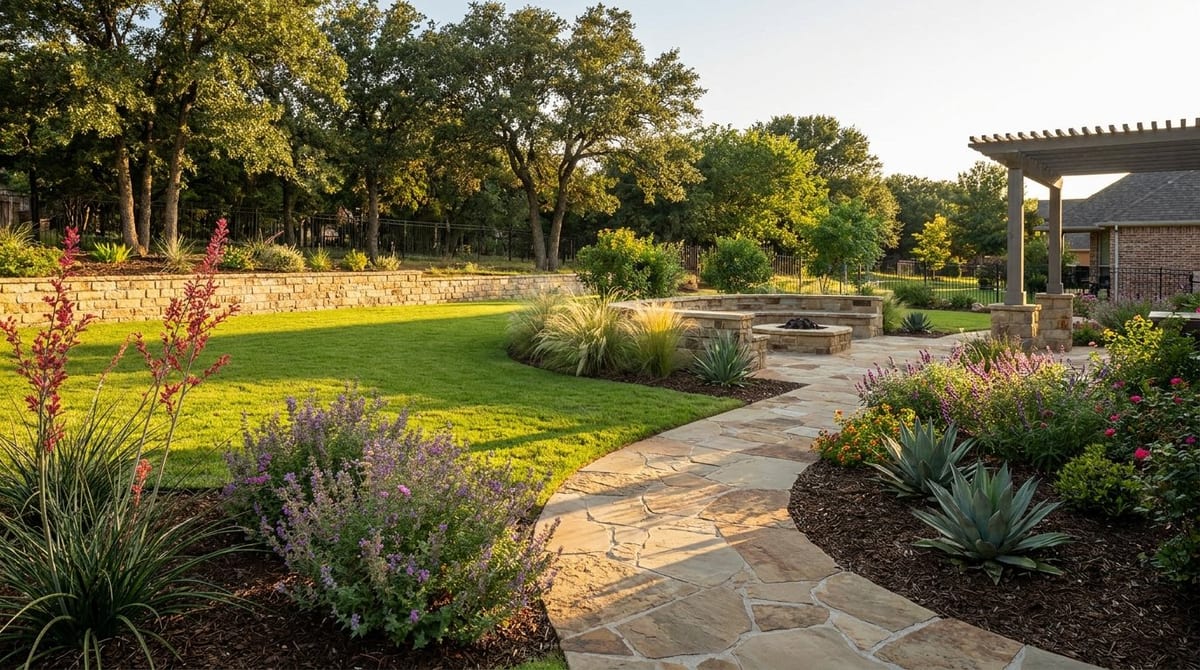
Retaining wall basics
When you need one, the materials, and why drainage makes or breaks it.
By The T.A.P. Team · August 2024 · 6 min read
A retaining wall holds back soil where the ground changes level — turning a slope into usable, terraced space, stopping erosion, and protecting foundations and hardscapes below. But retaining walls succeed or fail on two things most homeowners underestimate: drainage behind the wall and a proper base beneath it. Water pressure is what pushes walls over. Here's when you need a retaining wall, the common materials, and how to build one that lasts in Texas clay.
- Holds back soil; creates usable terraces
- Stops erosion on slopes
- Drainage behind the wall is critical
- A proper base is non-negotiable
- Tall walls need engineering / permits
When you need one
A retaining wall makes sense when you have a slope you want to level or terrace into usable space, erosion washing soil away, water and soil pressing toward a foundation or patio below, or a grade change you want to turn into planting beds or seating. It's both a functional fix and a way to reclaim unusable sloped yard.
Materials
Common choices are segmental concrete blocks (engineered, interlocking, the most popular for their strength and ease), natural stone (beautiful, premium), poured concrete (strong, utilitarian), and timber (economical but shorter-lived). Each trades off looks, cost, and durability — but the material matters less than what's behind and beneath it.
Drainage: the make-or-break
Here's what topples retaining walls: water building up in the soil behind them creates enormous "hydrostatic" pressure that pushes the wall out. A proper wall relieves that pressure with gravel backfill and a drainage pipe (and weep holes) that carry water away. Skipping the drainage is the number-one reason walls bulge, lean, and fail — see yard drainage.
Base, height, and code
Beneath the wall, a properly compacted base and the right setback (batter) keep it stable, and in our clay soil that base work is critical. Height matters for safety: taller walls (often those over about 4 feet) require engineering and a permit. Anything structural isn't a casual DIY — a failed retaining wall is dangerous and expensive. See hardscape cost and our hardscaping services.
| Material | Note |
|---|---|
| Segmental block | Engineered, strong, popular |
| Natural stone | Beautiful, premium cost |
| Poured concrete | Very strong, utilitarian |
| Timber | Economical, shorter-lived |
| All materials | Drainage & base decide success |
A retaining wall is only as good as the drainage behind it and the base beneath it. Water pressure, not the wall material, is what makes walls fail — so gravel backfill, a drain pipe, and weep holes are non-negotiable, along with a properly compacted base. And any wall over about four feet (or holding a serious load) should be engineered and permitted. Spend on the invisible parts; they're what keep the wall standing.
Retaining walls on North Texas slopes
DFW's clay soil and sloped lots make drainage-focused retaining walls a common need across Southlake, Flower Mound, and McKinney. We build walls with proper drainage and base, engineered where needed. See our hardscaping team.
The short version
- A retaining wall holds back soil to terrace slopes, stop erosion, and protect what's below.
- Walls fail from water pressure behind them, not usually the material.
- Proper drainage — gravel backfill, a drain pipe, weep holes — is critical.
- A compacted base and correct setback keep the wall stable in clay soil.
- Common materials: segmental block, natural stone, poured concrete, timber.
- Tall walls (often over ~4 ft) need engineering and a permit.
Retaining walls — frequently asked questions
Need a retaining wall?
Get one built with proper drainage and base. Serving Dallas–Fort Worth & North Texas for over 25 years.