
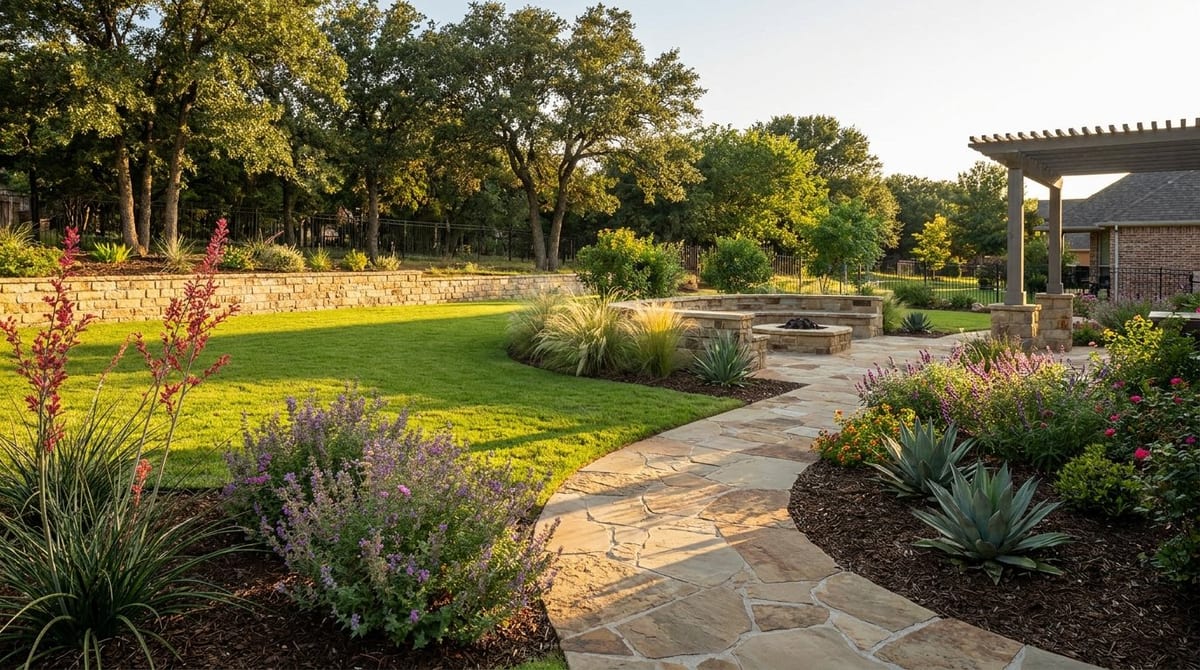
How to get rid of weeds in your lawn
A thick lawn is the best defense — plus pre-emergent timing that stops weeds early.
By The T.A.P. Team · February 2024 · 5 min read
The most effective weed control isn't spraying — it's a thick, healthy lawn that crowds weeds out before they start. Layered on top of that, a well-timed pre-emergent herbicide stops weed seeds from sprouting, and spot-treating with post-emergent handles what breaks through. Timing is everything in Texas: pre-emergent goes down before weeds germinate, not after. Here's how to win the weed battle for DFW lawns.
- A thick, healthy lawn is the #1 weed control
- Pre-emergent stops weeds before they sprout
- Time pre-emergent: late winter + early fall
- Post-emergent spot-treats weeds already up
- Never scalp or starve the lawn (invites weeds)
A healthy lawn is the best defense
Weeds move into weakness — thin, bare, stressed turf where seeds get sun and space. A thick, well-fed, properly-mowed and watered lawn shades out most weed seeds before they ever germinate. So the foundation of weed control isn't a chemical; it's the same good practices that make a healthy lawn (see mowing and fertilizing).
Pre-emergent: stop weeds before they sprout
A pre-emergent herbicide creates a barrier that stops weed seeds from germinating — but only if it's down before they sprout. In North Texas that means late winter (roughly February, before spring/summer weeds like crabgrass) and again early fall (before cool-season winter weeds). Miss the window and the weeds are already up, where pre-emergent can't touch them.
Post-emergent for breakthroughs
For weeds that are already growing, a post-emergent herbicide spot-treats them. The key is choosing a product safe for your grass — some common weed killers will damage St. Augustine — and following the label. Spot-treating beats blanket-spraying a whole lawn for a few weeds.
Don't create weed conditions
Many weed problems are self-inflicted: scalping the lawn too short, underwatering, compacted soil, and bare spots all open the door. Fixing the culture — correct mow height, deep watering, and repairing thin areas — does more for weeds long-term than any spray. A dense lawn is a weed's worst enemy.
| Approach | When / how |
|---|---|
| Thick, healthy lawn | Year-round prevention |
| Pre-emergent | Late winter + early fall (before sprout) |
| Post-emergent | Spot-treat visible weeds |
| Grass-safe product | Check the label (St. Aug is sensitive) |
| Fix culture | Mow height, watering, bare spots |
You can DIY
- Keep the lawn thick and healthy
- Apply pre-emergent on time
- Spot-treat weeds with a grass-safe product
- Repair thin/bare areas
- Mow at the right height
Call a pro
- Heavy or widespread weed infestations
- Choosing grass-safe herbicides
- A full weed-control program
- Lawn renovation for weedy turf
- Persistent problem weeds
The homeowners with the fewest weeds aren't the ones spraying the most — they're the ones with the thickest lawns and the best pre-emergent timing. Build a dense, healthy lawn to shade weeds out, put pre-emergent down before weeds germinate (late winter and early fall), and spot-treat the rest. Chasing weeds with post-emergent after they're everywhere is the hardest, least effective path.
Timing weed control in DFW
North Texas has both warm-season weeds (crabgrass in spring/summer) and cool-season weeds (in fall/winter), so the twice-a-year pre-emergent timing really matters across Allen, Frisco, and Southlake. We run timed weed-control programs. See our landscaping team.
The short version
- The best weed control is a thick, healthy lawn that crowds weeds out.
- Pre-emergent stops weed seeds from sprouting — but only if applied before they germinate.
- Time pre-emergent for late winter and again in early fall in North Texas.
- Post-emergent spot-treats weeds already growing — use a grass-safe product.
- Some weed killers damage St. Augustine, so check the label.
- Scalping, underwatering, and bare spots invite weeds — fix the culture.
Lawn weeds — frequently asked questions
Losing the weed battle?
Get a timed weed-control program that works. Serving Dallas–Fort Worth & North Texas for over 25 years.