
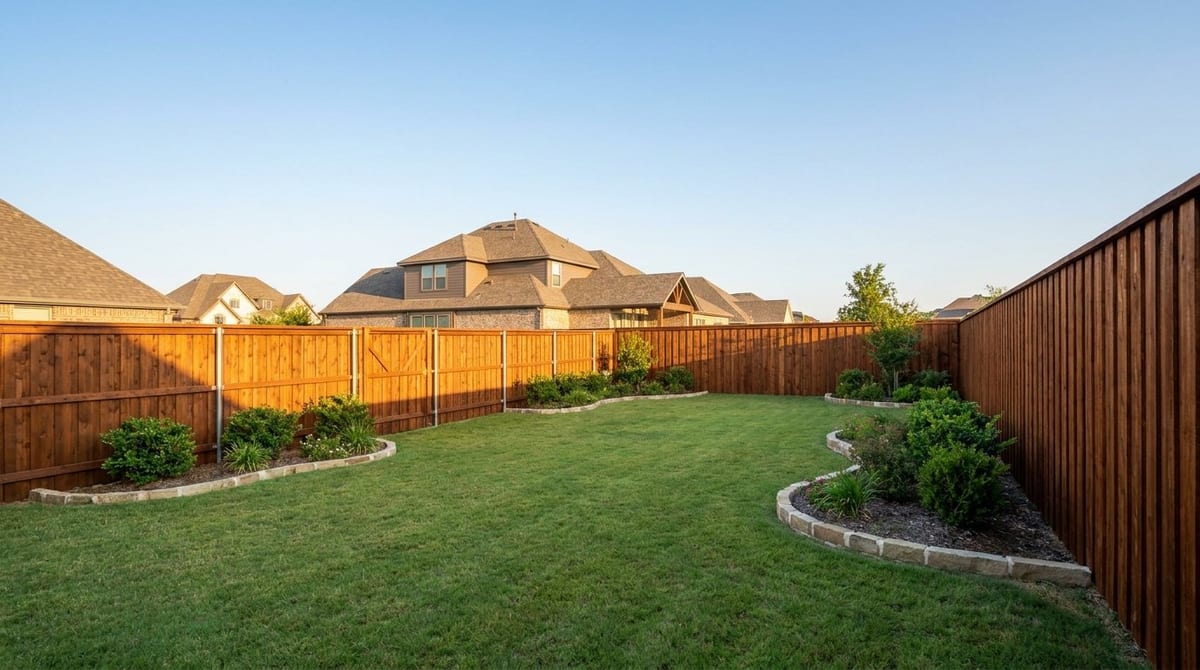
How to dog-proof a fence
Stop the dig, the jump, and the squeeze — the practical fixes.
By The T.A.P. Team · October 2024 · 5 min read
Dogs escape a fence one of three ways: under it (digging), over it (jumping or climbing), or through it (gaps and gate). Dog-proofing means closing off whichever route your dog is using — blocking the base against digging, adding height or an inward lean against jumpers, sealing gaps, and making sure the gate latches. A solid, gap-free fence with a secured base handles most dogs. Here's how to stop each escape route.
- 1Digging under? Block the base (buried barrier).
- 2Jumping over? Add height or an inward lean-in.
- 3Squeezing through? Close pickets/gaps.
- 4Gate not latching? Fix or add a lock.
- 5Bored dog? Exercise helps as much as the fence.
Stop the digging (under)
Diggers go under the fence at the base. Block them by burying an L-shaped barrier — chicken wire or hardware cloth bent outward at the bottom and buried a few inches down, or a concrete/paver footer along the fence line. Even large landscape rocks or a dig-defense trench help. The goal is a hard "no" wherever the dog paws at the base.
Stop the jumping and climbing (over)
For jumpers, add height — a 6-foot privacy fence stops most dogs, and toppers or an extension help with athletic ones. For climbers (who use horizontal rails or board-on-board overlaps as footholds), add an inward-angled "lean-in" at the top or "coyote rollers," and keep the smooth side facing the dog with no rails to grip. Remove anything near the fence they can launch off.
Close the gaps and the gate
Dogs squeeze through gaps between pickets and under gates. A board-on-board fence with no gaps is inherently dog-friendly; on a picket fence, add pickets or a barrier to close spaces. Don't forget the gate — make sure it latches every time (a self-latching or spring latch helps) and there's no gap underneath. An unlatched gate is the most common escape of all.
Address the why, not just the fence
A dog that's bored, anxious, or under-exercised will work harder to escape than any fence can economically stop. Plenty of exercise, enrichment, and companionship reduce the drive to bolt. Pair a solid, secure fence with a tired, content dog and escapes largely stop. If your fence is old and full of gaps, a proper privacy fence may be the real fix — see repair vs replacement.
| Symptom | Likely cause | What to do |
|---|---|---|
| Digs at the base | Escaping under | Bury an L-footer / add pavers |
| Jumps the fence | Escaping over | Add height or a topper |
| Climbs the fence | Uses footholds | Add an inward lean-in |
| Squeezes through pickets | Gaps too wide | Close gaps / board-on-board |
| Gets out the gate | Gate gap/latch | Fix latch; close the gap |
You can DIY
- Bury an L-shaped dig barrier
- Close picket gaps
- Add a self-latching gate latch
- Remove launch points near the fence
- Add height or a topper
Call a pro
- A full privacy-fence replacement
- Adding a lean-in along a long run
- Setting a concrete dig-footer
- Rebuilding a gappy old fence
- A gate that won't stay secured
Dog-proofing fails when people guess. Watch how your dog actually gets out — under, over, or through — and fix that specific route: a buried barrier for diggers, height or a lean-in for jumpers, closed gaps for squeezers, a working latch for gate-openers. And pair the physical fix with exercise; a content, tired dog tests the fence far less. Target the real route and the escapes stop.
Keeping dogs safe behind DFW fences
A secure, gap-free fence keeps dogs safely in the yard across Plano, Allen, and McKinney — and a solid board-on-board privacy fence with a self-latching gate handles most escape artists. We build dog-friendly fences and close up the gaps in old ones. See our fence team.
The short version
- Dogs escape under (digging), over (jumping/climbing), or through (gaps/gate).
- For diggers, bury an L-shaped barrier or add a paver footer at the base.
- For jumpers, add height or a topper; for climbers, an inward lean-in.
- Close gaps between pickets — a board-on-board fence has none.
- Make sure the gate latches every time; an open gate is the top escape.
- Pair a secure fence with exercise — a content dog tests it far less.
Dog-proofing a fence — frequently asked questions
Dog keeps escaping?
Get a secure, dog-friendly fence built or repaired. Serving Dallas–Fort Worth & North Texas for over 25 years.